
Mapping Elevator and Cable Car Wire Rope Orders to GB/T, EN, GOST, and DIN

Short answer: an elevator or cable-car wire rope order maps to GB/T, EN, GOST or DIN only when four elements sit in the same document — construction plus diameter, tensile grade, the execution standard with its part number, and the documents you will accept at handover. The standard tells the supplier which rule set to manufacture against. A certificate tells you which product types, diameters, markets and dates that rule set has been assessed for. Those two things are never automatically the same, and the space between them is where most rope orders lose time.
This guide is written for procurement engineers and technical buyers ordering elevator wire rope — typically 8×19S, 8×19W, 6×19S or 6×19W — and cable-car wire rope, typically 6×19S, 6×36WS or 6×37S. It does not argue that one standard family is superior. It shows how to write an order that cannot be misread in a foreign time zone, and what to open, read and check when the supplier returns documentation. The product data referenced here comes from Jiangsu Juli Steel Wire Rope Co.,LTD, a manufacturer whose rope families list GB/T, EN, GOST and DIN as applicable execution standards across diameters of 1 mm to 120 mm and tensile grades of 1570, 1670, 1770, 1870, 1960 and 2160 MPa.
Why the same elevator rope is quoted four different ways
A request that reads "DIN wire rope, 8×19, elevator duty, 500 m" can be answered correctly by four suppliers with four different ropes, four different test packs and four different prices — and none of them has made an error. The sentence contains a construction family, a rough duty and a length, but it does not contain a diameter, a tensile grade, a lay direction, a DIN part number, a core type or an acceptance document. Each supplier fills those blanks with its own default.
Three different questions are being collapsed into one word. First, which design and acceptance rule set governs the rope — its construction tolerance, breaking force calculation and test sampling. Second, which market access document the rope needs, because an EU-bound elevator package and a Russian-market package are assessed against different schemes. Third, which batch records you will accept on delivery. A single order can carry all three, but they have to be named separately or the technical review happens after the purchase order, when changing a construction is expensive.
What actually changes between a GB/T, EN, GOST and DIN order
What changes is rarely the steel. Across the duct rope families relevant to this discussion — including Power Wire Rope, Offshore & Marine, Port, Mining, Heavy-Duty, Oil & Gas and Construction Machinery ropes — the material is specified as high carbon steel, the diameter span is 1 mm to 120 mm and the available tensile grades are 1570, 1670, 1770, 1870, 1960 and 2160 MPa. What changes is the paperwork, the diameter band the document covers, and the wording your customer's assessor will read.
The duty profiles of the two applications push the order in different directions. An elevator rope works indoors in an enclosed hoist shaft, over a traction machine, deflector sheaves and rope termination assemblies, in a high-frequency reciprocating bending cycle. The requirement set is dominated by flexibility, fatigue resistance and stable elongation, because the car and counterweight are suspended on it every hour of the day. A cable-car rope works outdoors in mountain conditions with wind, snow, ice and ultraviolet exposure, bending repeatedly over drive sheaves, return sheaves and support rollers. In a cableway the rope may be a load-bearing rope supporting cabins, or a hauling rope pulling carriers in a loop — and those two roles are not ordered with the same language.
The four standard families: what each one is doing in your order
Each family enters the order at a different level, and treating them as interchangeable synonyms is the root cause of mismatched deliveries. The practical difference is explained below using only the reference numbers and certificate scopes recorded in the supplied documentation.
GB/T — the Chinese national series
GB/T appears as an applicable execution standard across the rope families and as a named reference inside certification scope. Two GB/T numbers are recorded in the supplied documentation: GB/T 8918-2006 and GB/T 20118-2017, both listed in the scope of the GOST certificate described below. For a buyer this means the GB/T route is real and documented, but the order should say which of the two governs, because "GB/T" alone does not identify a rule set to a production planner. Add the construction designation, the diameter, the grade and the lay direction, and the GB/T reference becomes actionable.
EN — the European series
EN enters an order through two channels. EN 12385-1:2002+A1:2008 is the standard cited in the CE certificate ICR/VC/HS240422, issued by ICR for the EU market, issued 2024-08-04 and valid to 2029-07-04. EN 12385-4 also appears in the scope of the GOST certificate. The CE record is the more instructive document for a buyer, because it does not simply say "steel wire rope": it lists the covered types with a diameter band for each. Recorded entries include 6×7 at 2–40 mm, 8×7 at 2–40 mm, 6×19 at 3–60 mm, 8×19 at 8–60 mm, 6×36 at 8–120 mm, 8×36 at 8–60 mm, 6×19M at 8–28 mm, 6×37M at 8–52 mm, 18×7 at 6–28 mm, 34M×7 at 10–60 mm and 35W×7 at 8–40 mm.
That list is why the certificate cannot be treated as a blanket statement. An 8×19 elevator rope at 16 mm sits inside the recorded 8×19 band. A 6×37S cable-car rope does not appear as a separate line in that list — the nearest recorded entry is 6×37M at 8–52 mm. Before you attach a CE document to a 6×37S line item, ask the supplier in writing how that construction is addressed. A supplier that answers precisely is a supplier you can audit.
GOST — the Russian series
GOST 3241-91 is the reference recorded in certificate POCC RU C-CN.AД85.B.00499/24, issued by СЕРКОНС for the RU market, issued 2024-06-28 and valid to 2029-06-27. Its scope is broader than a single product: steel wire rope in multiple construction types, diameter 1 mm to 120 mm, assessed against GOST 3241-91 together with GB/T 8918-2006, GB/T 20118-2017 and EN 12385-4. For a Russian-market elevator or cableway package, the practical questions are whether your construction and diameter fall inside that 1–120 mm envelope and whether the document is still valid on the shipment date.
DIN — the German designation
DIN is listed as an applicable execution standard in the product data, and it is routinely named by European and export buyers. However, no DIN part number and no DIN-specific certificate appear in the supplied documentation. That is not a defect in the product; it is a gap in the order. DIN designations are precise, and a rope made "to DIN" without a stated part number, property class and acceptance document is a rope made to an assumption. The correct move is to write the exact DIN designation into the technical annex, agree the acceptance test in the same annex, and treat the DIN reference as a specification commitment rather than a label on a datasheet.
ISO 2408-2017 as the cross-reference
When an order travels to a classification society rather than a national regulator, ISO 2408-2017 becomes the anchor. ABS certificate 24-0072296-PDA (American Bureau of Shipping, global, issued 2024-10-08, valid to 2029-10-07) cites ISO 2408-2017 and lists specific models — 6×19S-IWRC, 6×36WS-IWRC, 8×61M-FC, 6×25F-IWRC, 6×24FC-FC, 8×26WS-IWRC, 4×V39FC-FC, 18×7-WSC, 35(W)×7 and 35(W)×K7 — for loose gear items used on lifting equipment. SIRIM certificate PC013111 (SIRIM QAS INTERNATIONAL SDN. BHD., MY market, issued 2025-11-07, valid to 2026-12-07) cites MS ISO 2408:2004 for steel wire ropes for general purposes. In both cases the model list and the stated service are part of the scope, so they must be read, not skimmed.
A seven-step mapping method for elevator and cable-car orders
The method below converts an ambiguous standard reference into a purchasable line item. Each step produces a sentence that either appears in the RFQ or is deliberately excluded.
Step 1 — Lock the role and the construction. Decide whether the rope is a suspension rope, a hauling rope or a compensation element. Then name the construction from the available sets: 8×19S, 8×19W, 6×19S or 6×19W for elevator duty; 6×19S, 6×36WS or 6×37S for cableway duty. A construction named in the RFQ removes the most common source of substitution.
Step 2 — Fix diameter and tensile grade. State the diameter in millimetres and the grade from the available series — 1570, 1670, 1770, 1870, 1960 or 2160 MPa. Do not state a grade range and hope the supplier picks the top of it. The grade interacts with breaking force, sheave pressure and, for elevators, the elongation behaviour your traction design already assumed.
Step 3 — Name the standard with its part number. Write "GB/T 8918-2006", "GB/T 20118-2017", "EN 12385-1:2002+A1:2008", "EN 12385-4" or "GOST 3241-91", not "GB/T", "EN" or "GOST". For DIN, write the exact designation agreed in the technical annex. A standard without a part number cannot be quoted consistently.
Step 4 — Check the document scope against the line items. Take the certificate the supplier offers and confirm four things: the construction type is named, the diameter sits inside the recorded band, the market matches the destination, and the validity window covers the shipment date. A document that fails any one of these is a supporting document, not a coverage document.
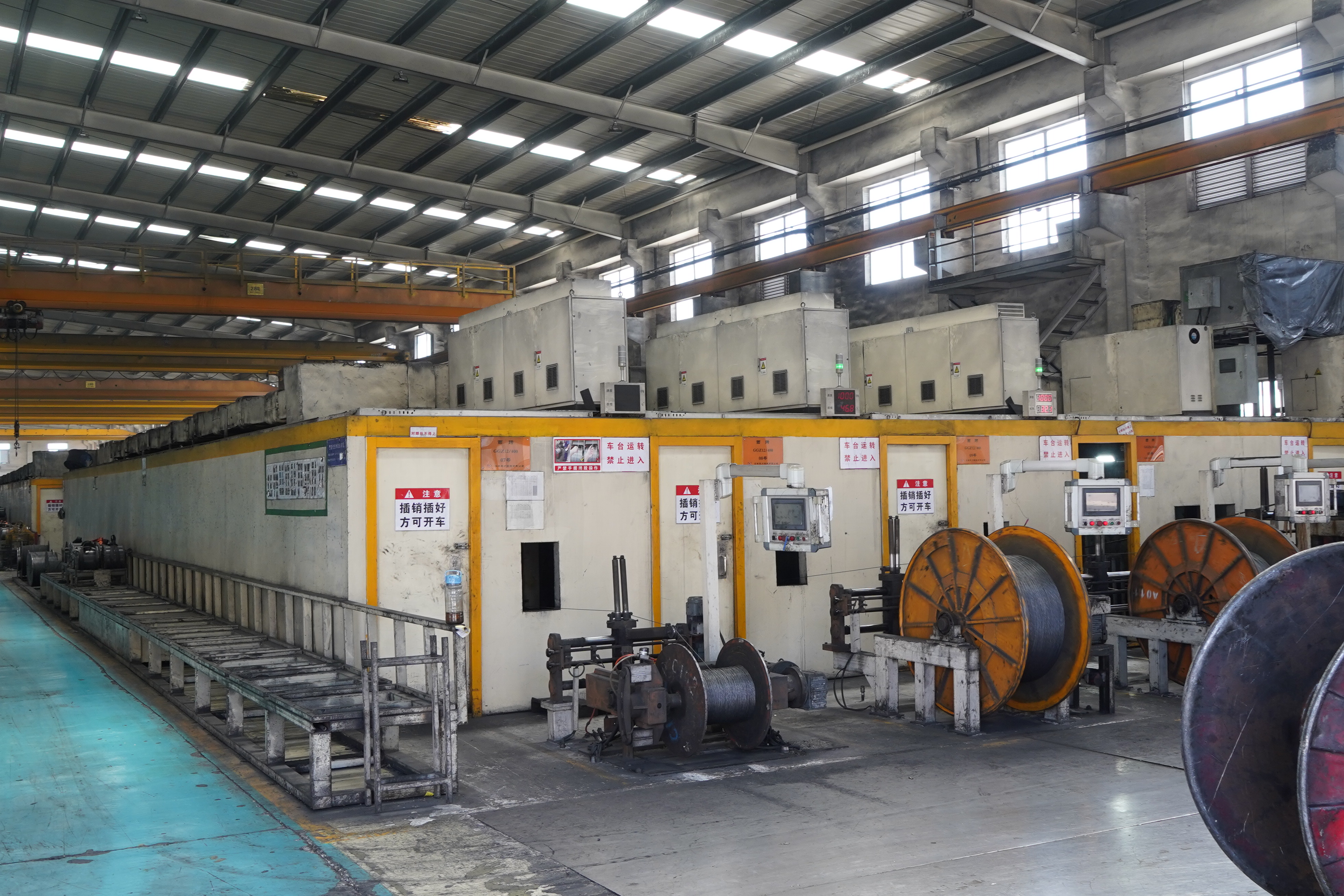
Step 5 — Define the acceptance tests you will read. Ask for the records, not the promise. The relevant test set for these rope families includes raw material incoming inspection, semi-finished product spot checks, finished product testing, breaking load testing and fatigue testing, with 100% full machine running test before delivery stated as standard practice. Name which of those records must travel with each reel or coil.
Step 6 — State length, packing and commercial frame. Customisation is available on construction, diameter, length, tensile strength, surface treatment, applicable standard and packing. The stated minimum order quantity is 1000 meters and the stated lead time is 25 days. If your project needs 350 m of 8×19S and 900 m of 6×36WS, say so early — mixed line items change how a factory schedules, and the earlier that is visible the less likely a partial shipment is presented as a complete one.
Step 7 — Write the after-sales expectation into the same annex. Remote online technical support, overseas engineer on-site service, regular operation guidance and maintenance consultation are stated service capabilities. Put the ones you need on the purchase order. An installation team that expects a commissioning visit should not discover the scope was never discussed.
Worked example 1: an elevator rope order
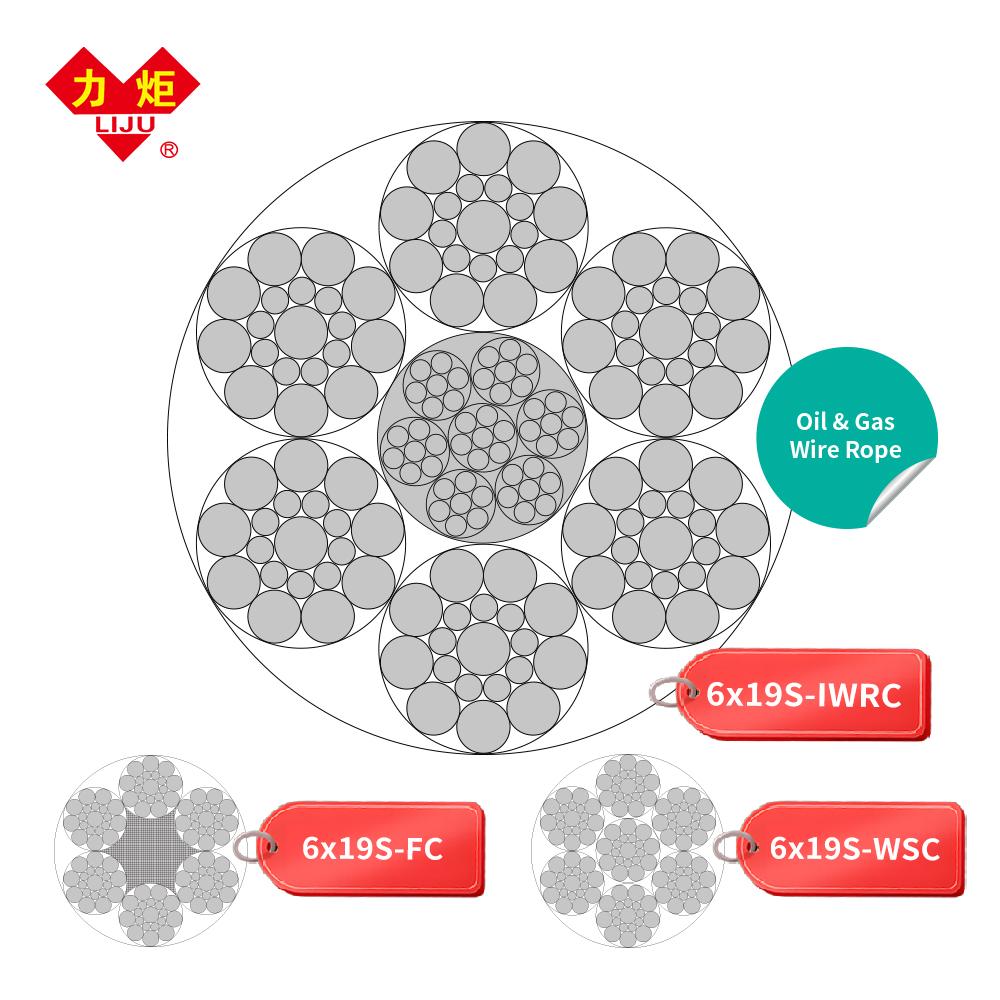
An elevator OEM sourcing for an EU destination specifies: 8×19S, 16 mm, 1770 MPa, right regular lay, EN 12385-1:2002+A1:2008 as the execution standard, CE certificate ICR/VC/HS240422 attached as the coverage document, breaking load test report per batch, and 100% full machine running test before delivery. Every element now maps to something the factory can plan and something the buyer can reject against.
Note how the scope check works in this example. The CE record lists 8×19 with a diameter band of 8–60 mm, so 16 mm sits inside it, and the EU market matches the destination. If the same buyer had specified 8×19W at 6 mm, the diameter would fall below the recorded band and the coverage question would need a written answer before the PO, not after. That single check is worth more than any general assurance that a supplier "holds CE".
Worked example 2: a cable-car rope order
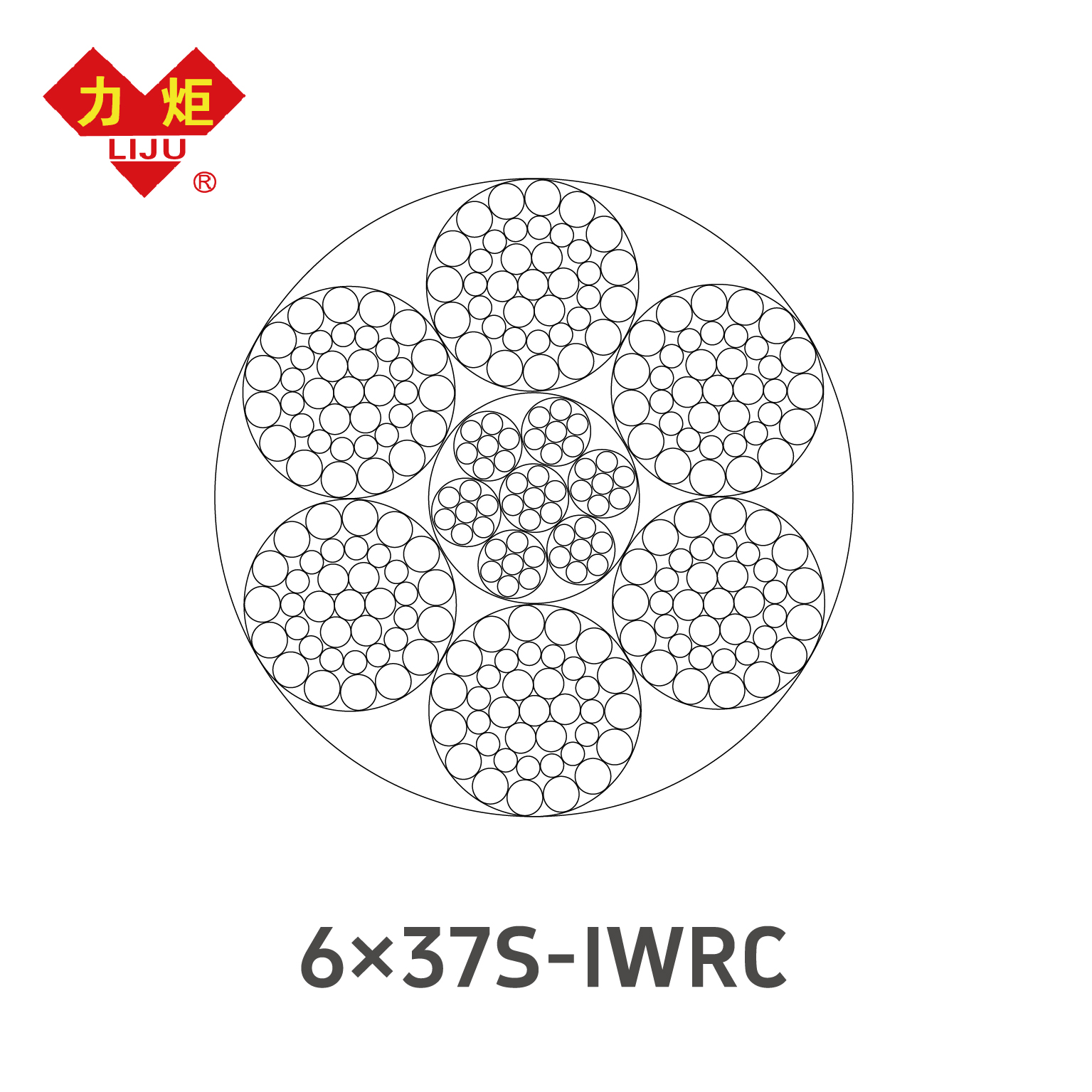
A ropeway operator replacing a hauling rope on a mono-cable circulating gondola specifies: 6×36WS, 24 mm, 1960 MPa, agreed lay, GOST 3241-91 as the execution standard for a Russian-market installation, certificate POCC RU C-CN.AД85.B.00499/24 referenced as the coverage document, fatigue test records alongside breaking load records, and a splicing or termination service listed separately if required.
The scope check runs the same way. The GOST scope covers multiple construction types from 1 mm to 120 mm, so 24 mm and 6×36WS sit comfortably inside the envelope, and the RU market matches. The validity window — 2024-06-28 to 2029-06-27 — covers the shipment. The order is now defensible in an audit, because each claim points to a clause, a band or a date rather than to a logo on a brochure.
Standard-to-document mapping table
The table summarises how each family enters an order and what the buyer should confirm in writing. It reports only reference numbers and scope facts recorded in the supplied documentation; it is not a substitute for the certificate itself.
| Standard family | Reference numbers recorded | Document recorded alongside it | What to confirm in the order |
|---|---|---|---|
| GB/T | GB/T 8918-2006; GB/T 20118-2017 | Named in the GOST certificate scope (POCC RU C-CN.AД85.B.00499/24) | Which of the two numbers governs; construction, diameter and grade |
| EN | EN 12385-1:2002+A1:2008; EN 12385-4 | CE certificate ICR/VC/HS240422 (EU, valid to 2029-07-04) | Whether the rope type and diameter appear in the CE scope list |
| GOST | GOST 3241-91 | Certificate POCC RU C-CN.AД85.B.00499/24 (RU, valid to 2029-06-27, 1–120 mm) | Type and diameter inside 1–120 mm; validity on shipment date |
| DIN | No DIN part number recorded in the supplied product data | No DIN-specific certificate recorded | Write the exact designation and acceptance test into the annex |
| ISO 2408-2017 | ISO 2408-2017; MS ISO 2408:2004 | ABS 24-0072296-PDA (global); SIRIM PC013111 (MY, valid to 2026-12-07) | Whether the listed models and stated service match your line items |
Where elevator and cable-car order language diverges
Both applications may use the same standard families, but the weight of the specification shifts. The comparison below shows which order elements deserve the most detail in each case.
| Order element | Elevator rope (8×19S, 8×19W, 6×19S, 6×19W) | Cable-car rope (6×19S, 6×36WS, 6×37S) |
|---|---|---|
| Duty environment | Enclosed hoist shaft; frequent reciprocating bending over traction and deflector sheaves | Open mountain site; wind, snow, ice and ultraviolet exposure over drive, return and support sheaves |
| Primary technical emphasis | Flexibility, fatigue resistance, stable elongation under continuous cyclic load | Bending resistance, weather resistance and high tensile strength; load-bearing and hauling ropes may be specified separately |
| Standard naming risk | Order names "EN" or "GB/T" with no part number and no grade | Order names a construction that is not itemised in the certificate type list |
| Evidence to attach | Breaking load and fatigue records; running test before delivery; termination assembly specification | Construction designation on the reel; test records; splicing or termination scope if in the contract |
What to verify in the supplier documentation
A certificate is a document with four boundaries: product type, diameter, market and time. Verification means reading those boundaries against your order, not reading the logo. Work through this list before releasing any line item.
- Type coverage. Is your construction named, or only a neighbouring construction? 6×19, 8×19, 6×36 and 6×37M appear in the CE scope; a 6×37S line needs its own answer.
- Diameter coverage. Compare the ordered millimetre value with the recorded band for that type, not with the general 1–120 mm product span.
- Market coverage. Check the destination against the recorded market: EU for the CE record, RU for the GOST record, MY for SIRIM PC013111, ID for SNI 33.23/016/LSPro BBSPJILM/07/2024 covering steel wire rope for petroleum and natural gas.
- Validity window. Confirm the expiry date sits beyond the shipment date. SIRIM PC013111 runs to 2026-12-07, so a 2027 delivery needs a current replacement document.
- Scope wording. ABS 24-0072296-PDA is written for loose gear items used on lifting equipment and names specific models. Whether that wording satisfies your installation's acceptance regime is a question for your own conformity assessor, not for the rope supplier.
- Certificate holder and issuer. Read who issued it and who holds it. EPD-2026-01 is issued by MCC Inspection and Certification Co., Ltd. under ISO 14025 with a cradle-to-gate scope for a 1000 kg wire rope reference, valid 2026-01-30 to 2031-01-29 — useful for environmental procurement, and a different question from rope strength.
- Test records per batch. Confirm incoming material inspection, semi-finished spot checks, finished product tests, breaking load test and fatigue test will be supplied, plus the 100% full machine running test before delivery.
- Traceability of the reel. Construction, diameter, grade, lay, length and standard reference should appear on the reel label and the mill certificate alike.
Common mismatches that survive technical review
These are the failure patterns that most often reach a purchase order unchanged, because each one looks correct on a datasheet.
- The standard acronym without a number. "DIN" or "GOST" in a specification line is a direction, not a requirement. A factory can only confirm compliance against a numbered rule set.
- The grade left open. A rope offered at 1570 MPa and a rope offered at 2160 MPa can both legitimately answer the same construction line. If the grade is absent, the quote is not comparable and the sheave pressure calculation may not be either.
- Certificate scope assumed to be product-wide. A document covering 6×36 at 8–120 mm does not by itself answer a question about an 8×19 rope at 6 mm.
- Expiry overlooked. A certificate attached to an RFQ in 2026 may lapse before a 2027 installation. The document dates are part of the technical requirement, not an administrative afterthought.
- Application role not stated. For cableways, load-bearing rope and hauling rope carry different duties. An order that names only a diameter leaves the supplier to assume the role.
Frequently asked questions
Does a CE or GOST certificate mean my elevator rope order is compliant?
No. A certificate confirms that a defined scope has been assessed; it does not confirm that your specific line item falls inside it. The CE record ICR/VC/HS240422 lists covered types with diameter bands, and the GOST record POCC RU C-CN.AД85.B.00499/24 covers multiple construction types from 1 mm to 120 mm. You still have to match construction, diameter, market and validity to your order, and confirm the acceptance documents you require are supplied with the batch.
Can one supplier make 8×19S elevator rope and 6×36WS cable-car rope to different standard families in one order?
Yes, provided each line item carries its own standard reference and acceptance document. The available rope families cover construction, diameter, length, tensile strength, surface treatment, applicable standard and packing as customisable parameters, and the stated manufacturing capability includes 3000 tons per month with a 25-day lead time and a 1000-meter minimum order quantity. What must not happen is one standard reference being applied loosely to the whole order, because the two constructions sit in different rows of the same certificate scope.
What drives the cost difference between a GB/T-referenced and a DIN-referenced order?
The acronym itself does not set cost; the obligations attached to it do. A DIN line that requires a specific designation, a tighter diameter tolerance, additional fatigue or breaking load records, individual reel marking and non-standard lengths will cost more to produce and document than a GB/T line that does not. Additional test records, 100% full machine running test before delivery, mixed line items and special packing all add work. Specify the obligations first, then compare quotations on the same obligation set.
How should a sample be validated before the full order is released?
Validate the sample against the same annex that will govern production. Check the construction and lay on the reel label, measure the diameter, confirm the grade stated on the mill certificate, and require the breaking load result for the sample batch. For elevator duty, ask how elongation behaviour is controlled; for cableway hauling duty, ask for fatigue evidence. A sample that arrives without the matching document set has validated nothing except the delivery service. Buyers who want to run this step should request the current brochure and specification pack as the starting document set.
How long does a mapped order take, and what should be ordered first?
The stated lead time is 25 days and the stated minimum order quantity is 1000 meters, measured from a technically complete order — which is why the mapping work should happen before the RFQ, not during production. The practical sequence is: confirm the standard reference and certificate scope, confirm construction and grade, then release the quantity. Buyers can review the full product and standard range in the Jiangsu Juli Steel Wire Rope Co.,LTD catalogue and download the specification brochure below before finalising the annex.
Conclusion
Mapping an elevator or cable-car wire rope order to GB/T, EN, GOST or DIN is a documentation task before it is a purchasing task. The rope may be high carbon steel in a 1–120 mm diameter span at any of six tensile grades; what separates a smooth delivery from a disputed one is whether the order names a numbered standard, a construction, a diameter, a grade and the records you will accept — and whether the certificate offered actually covers that combination in that market on that date.
Use the seven-step method, run the scope check on every line item, and treat DIN as a designation to be agreed rather than a label to be assumed. Where a construction such as 6×37S is not separately itemised in the document you were given, ask the question in writing; a precise answer is the cheapest form of technical assurance available to a buyer.

Next step: download the specification brochure for construction tables, diameter ranges and standard references, or review the full range online at juli-rope.com.
Brochure (PDF): download the Jiangsu Juli Steel Wire Rope product brochure.
Have Questions or Need More Details?
Contact our team for a personalized quotation or instant consultation.
Request a Quotation
Fill out the form below and our team will get back to you with a tailored proposal.
WhatsApp Direct Chat
Prefer to chat in real-time? Message us on WhatsApp for instant assistance & quick answers.
- Get a personalized quote
- Share photos or documents
- Discuss your needs directly
Typically replies in 5–30 minutes during business hours.