Steel Wire Rope Application Guide: Agriculture, Logging, Fishing & Power Scenarios
Steel Wire Rope Application Guide: Agriculture, Logging, Fishing & Power Scenarios
Quick answer: in agriculture, logging forestry, fishing and power utility work, construction and surface treatment decide service life far more than nominal diameter does. Agricultural machinery such as balers and feeding systems generally runs small-diameter strand ropes built on 1×7, 1×19, 6×7, 6×19M, 6×12-7FC or 6×24MFC; logging and forestry skidding, winching and yarding work uses 6×19S, 6×19M, 6×26WS and compacted K6×26WS or K6×36WS; fishing deck machinery — trawl warps, net drums and winches — is served by 6×7, 6×19S, 6×24S, 6×26WS, 6×36WS and 3×31WS; power transmission and utility line work typically relies on 1×7, 1×19, 6×7, 6×19M or 6×37M. All four families are produced from high carbon steel in diameters from 1 mm to 120 mm, with tensile grades of 1570, 1670, 1770, 1870, 1960 and 2160 MPa, to execution standards including GB/T, EN, GOST and DIN.
Problem Definition: Why One Steel Wire Rope Specification Cannot Serve Four Industries
On a quotation sheet, agriculture, logging, fishing and power look like the same buyer: diameter, tensile grade, length. In service they are four different buyers. Each industry destroys rope through a different mechanism, and a specification that prevents one failure mode can be irrelevant — or actively unhelpful — in another.
Agriculture loads rope at high cycle frequency and low individual load, through small sheaves, knotter needles and tying mechanisms. The dominant degradation mode is bending fatigue at tight bend radii, combined with deformation and surface wear where rope passes over small-diameter guides. A rope chosen purely for breaking load often fails here because the load was never the problem.
Logging and forestry loads rope with shock. Skidding, winching and yarding transmit sudden peaks when a log takes up slack or catches on ground obstacles, and the rope simultaneously abrades against soil, rock and bark and reverses direction over fairleads, butt plates and snatch blocks. Abrasion resistance, structural stability under shock and corrosion protection in wet, muddy ground all matter at once.
Fishing adds continuous saltwater exposure and sustained spooling on drums and winches. Corrosion proceeds both on the outer surface and inside the strand gaps, while cyclic trawl loads drive fatigue and wire-to-wire wear at sheaves. Because replacement is carried out at sea or in port, a fishing operator pays twice for a rope that fails early: once for the rope, once for the lost fishing time.
Power utility work is dominated by long spans, static or slow-pull tension and occasional short-duration peak loads during stringing, plus year-round outdoor weathering. Small-diameter strand rope is used where tying, lashing and light static duty are involved, while larger six-strand constructions handle pulling duty. Kinking and handling damage, clamp and grip wear, and surface corrosion are the practical failure points rather than high-cycle fatigue.
The procurement gap that produces most premature replacements is simple: a request that states only diameter, tensile strength and length leaves construction, number of outer strands, core type, lay direction, surface treatment and applicable execution standard unspecified. A rope can meet every number on the enquiry and still be the wrong rope for the duty cycle. A specification-ready brief therefore lists the duty cycle, the failure mode to be avoided, the construction, the diameter, the tensile grade, the surface or coating, the applicable standard, and the certification required by the destination market.
Industry Background: Volume, Corrosion Demand and Specification Drivers
Steel wire rope demand continues to grow across all four of these segments. The global steel wire rope market is projected to reach USD 13.88 billion by 2030, growing from USD 10.49 billion in 2025 at a CAGR of 5.8%, according to MarketsandMarkets. Estimates of the 2025 baseline vary between research houses — Dataintelo publishes approximately USD 8.4 billion for the same period — so the useful signal is direction and structure rather than a single figure.
Supply is concentrated in Asia. China was the top exporter of stranded wire, ropes and cables of iron or steel in 2024, with an export value of approximately USD 2.60 billion, according to World Integrated Trade Solution (WITS) data. For buyers in agriculture, forestry, fishing and power, this means the practical sourcing question is not whether Chinese rope is available, but which construction and documentation package is quoted.
Corrosion protection is the single most visible demand driver. In 2025, galvanized steel wire ropes accounted for 41.3% to 46% of total product demand globally, driven by corrosion resistance requirements in marine and mining environments, per Dataintelo and Business Research Insights. Fishing deck machinery and coastal or humid power assets sit squarely inside that driver, which is why electro-galvanized and hot-dip galvanized rope dominate those enquiries rather than ungalvanized rope.
On the application side, construction remains the largest end-user of steel wire rope, accounting for approximately 27% to 40.7% of total market share in 2024–2025 according to Grand View Research and other industry research. On specification, ISO 2408:2017 specifies the minimum requirements for the manufacture and testing of steel wire ropes for general purposes, including lifting and rigging — the baseline that regional certifications build on. Where standardisation practice has moved fastest is in heavy hauling: compacted strand ropes were adopted in approximately 57% of heavy-duty hauling systems in mining globally in 2025, per Business Research Insights. The same compacted-strand logic — higher fill factor, better abrasion behaviour against sheaves and drums — is now applied to forestry skidding rope.
Detailed Solution: The High Carbon Steel Rope Platform Behind These Four Scenarios
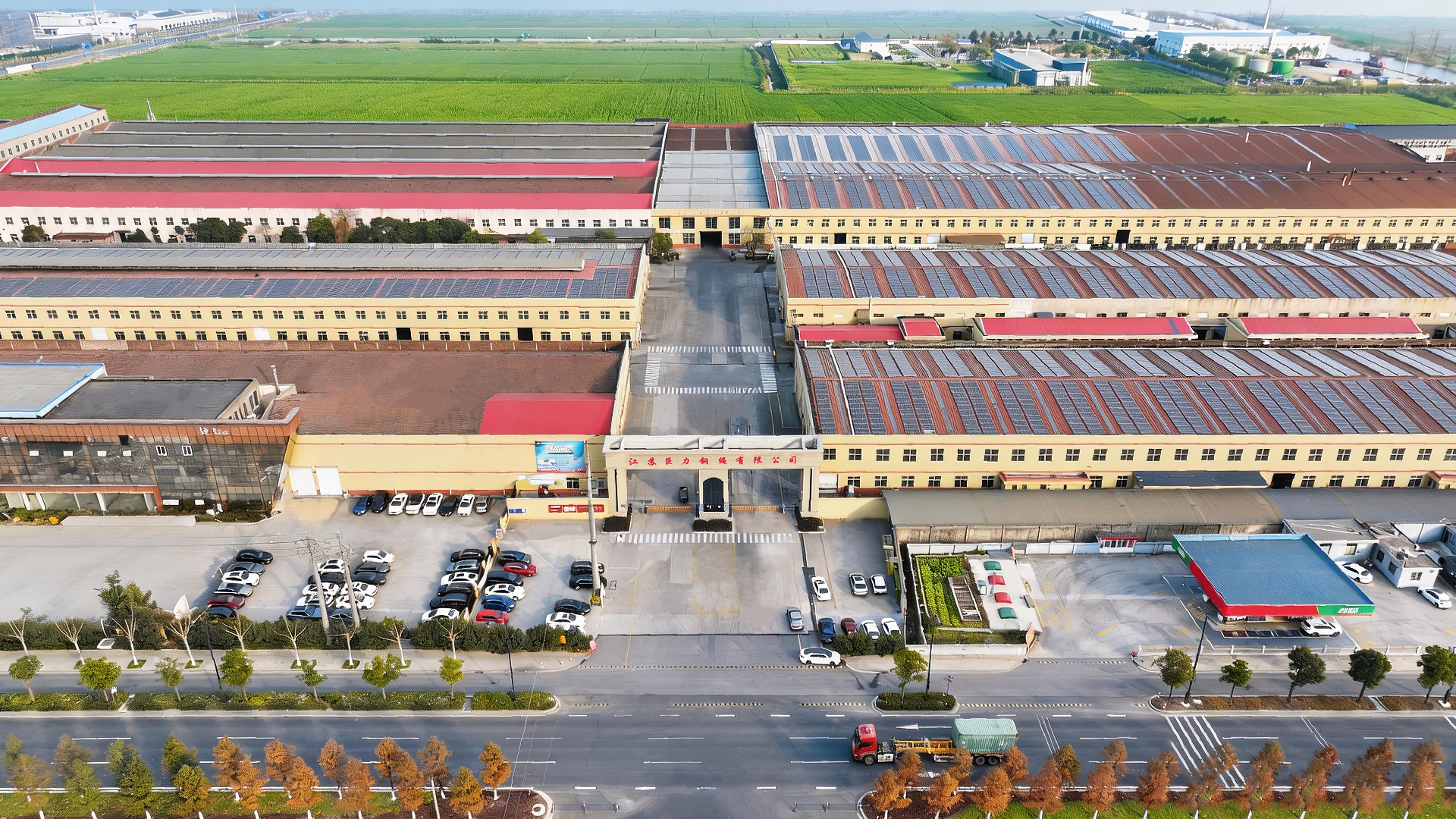
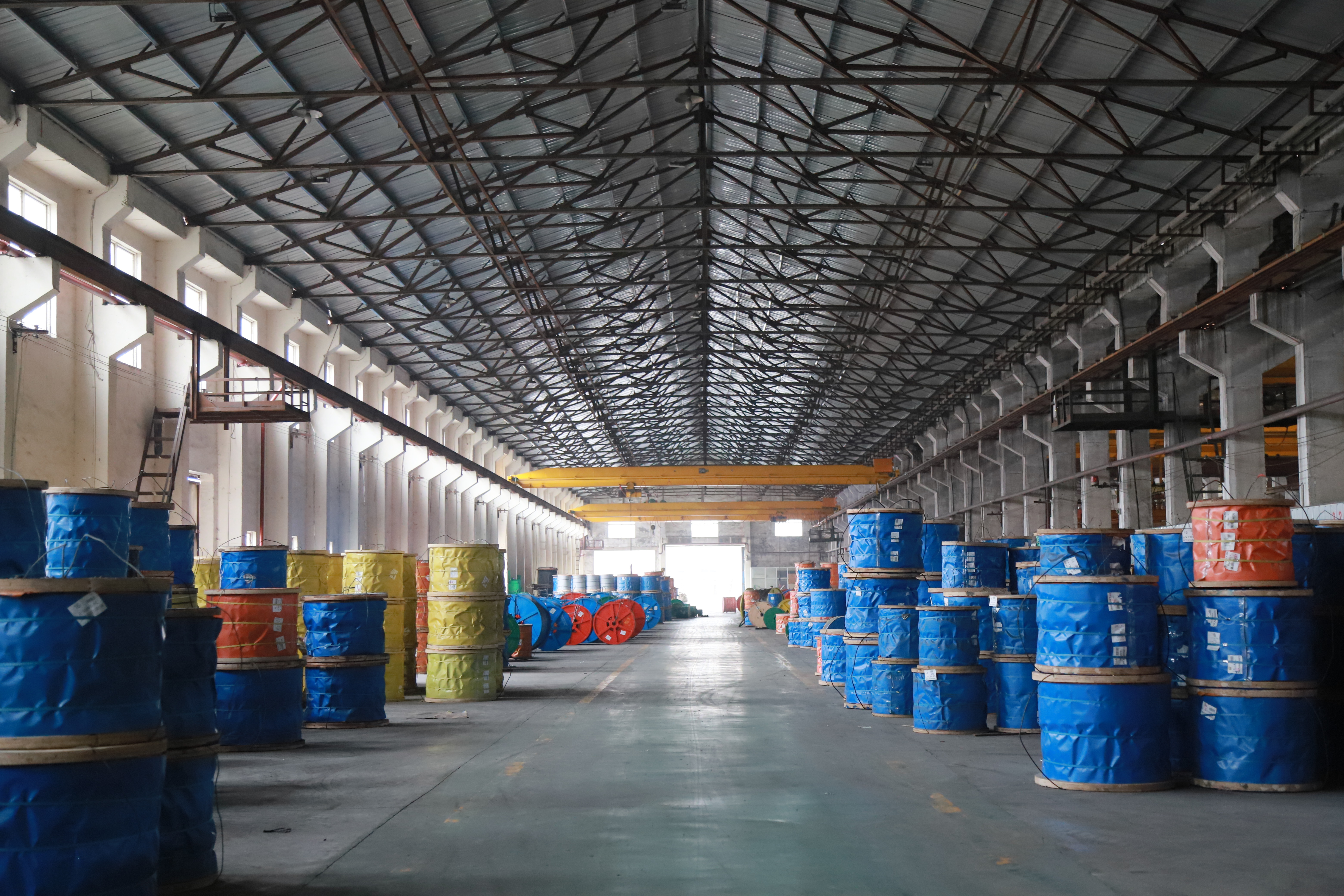
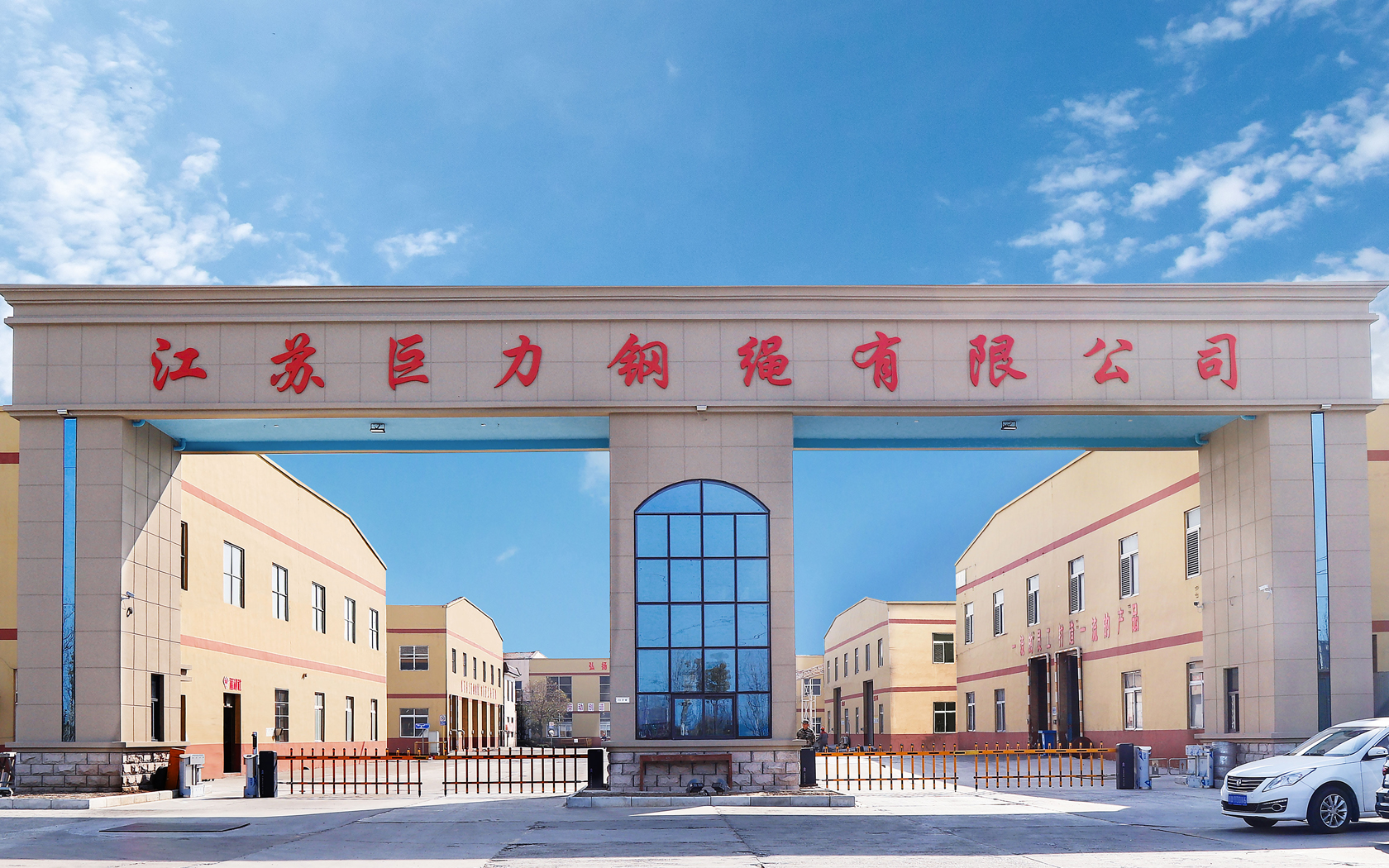
Jiangsu Juli Steel Wire Rope Co.,LTD is a manufacturer of steel wire rope and lifting accessories based in Nantong, China, with three production bases worldwide: the Nantong and Jiyuan bases in China and the Bekasi base in Indonesia. The company's origins date back to 1958, it holds total assets of USD 150 million, covers an area of 350,000 square metres, and has an annual production capacity of 250,000 tons of steel wire rope. It operates 42 distribution centres in major Chinese cities including Shanghai, Guangzhou, Chengdu and Xi'an, and has set up offices in more than 30 countries and regions, including Europe, the United States, Indonesia, the United Arab Emirates, Egypt, Russia and Brazil.
The production platform is relevant to all four scenarios because the four families are drawn from one material system and one dimensional range rather than from separate special-purpose lines. All four product families in this guide are made from high carbon steel, with a rope diameter range of 1 mm to 120 mm and tensile grades of 1570, 1670, 1770, 1870, 1960 and 2160 MPa, manufactured to execution standards including GB/T, EN, GOST and DIN.
Corrosion resistance is delivered through surface treatment rather than through a single standard product. The available options are un-galvanized, electro-galvanized, hot-dip galvanized, stainless and plastic-coated wire rope. In practice this means a fishing operator can specify hot-dip galvanized or stainless rope for continuous saltwater exposure, a forestry operator can specify galvanized rope for wet ground and standing water, and a power utility buyer can specify galvanized or plastic-coated rope for outdoor spans with long replacement intervals.
Construction coverage spans bundling ropes, cross laid wire rope, parallel laid wire rope, anti-rotation wire rope, compacted strand ropes, shaped strand wire rope and locked coil ropes. Within that range, the four scenario families map as follows:
- Agricultural Wire Rope — 1×7, 1×19, 6×7, 7×7, 6×19M, 6×12-7FC, 6×15-7FC, 6×24MFC.
- Logging Forestry Wire Rope — 6×19S, 6×19M, 6×26WS, K6×26WS, K6×36WS.
- Fishing Wire Rope — 6×7, 6×19S, 6×24S, 6×36WS, 6×26WS, 3×31WS.
- Power Wire Rope — 1×7, 1×19, 6×7, 6×19M, 6×37M.
Compliance evidence available to buyers includes API, LR, ABS, CCS, ISO9001, CE, GOST, EPD, SIRIM, SNI and MA certification coverage. For the four scenarios in this guide, the certificates that most often decide a purchase order are CE to EN 12385-1, GOST, SIRIM, SNI, CCS, ABS, API and EPD, which are set out in detail in the certification table later in this article.
Step-by-Step Breakdown: Six Steps from Duty Cycle to Purchase Order
Step 1 — Define the duty cycle and the failure mode to avoid
Write down how the rope is loaded: continuous cycling at small bend radii (agricultural tying and feeding), shock and abrasion with reverse bending (logging skidding and yarding), continuous saltwater immersion with drum spooling (fishing), or long static pulls with intermittent peaks and outdoor exposure (power). Then state the failure mode you are buying against — fatigue, abrasion, corrosion, kinking or shock — because that single decision drives everything that follows.
Step 2 — Select the construction from the scenario family
Choose the strand configuration before choosing a diameter. Small single-layer strand ropes such as 1×7 and 1×19 and simple six-strand constructions such as 6×7 behave predictably where bend radii are small and loads are low. Where abrasion and shock dominate, six-strand Warrington-Seale and compacted designs such as 6×26WS, K6×26WS and K6×36WS provide more outer-wire contact and a denser cross-section against sheaves. Where the load path must resist rotation, such as a single-line lifting or warping duty, an anti-rotation construction such as 3×31WS belongs in the specification.
Step 3 — Set diameter and tensile grade against the real load, not the catalogue maximum
Diameter and tensile grade are selected together, from 1 mm to 120 mm and from 1570 MPa to 2160 MPa. Higher grades allow a smaller diameter for the same breaking load, but the smaller diameter also reduces abrasion allowance and increases sensitivity to sheave wear. In agriculture and power applications where ropes run over small-diameter hardware, a moderate grade in a slightly larger diameter frequently outlasts a high-grade rope in a minimum diameter.
Step 4 — Choose the surface treatment for the environment
Ungalvanized rope is appropriate where corrosion exposure is limited and the rope is lubricated and inspected regularly. Electro-galvanized rope suits general outdoor exposure and intermittent moisture. Hot-dip galvanized rope is the usual choice for continuous or frequent saltwater and humid exposure, including fishing deck machinery and coastal power assets. Stainless wire rope is specified where maximum corrosion resistance is required and load duty is moderate. Plastic-coated rope adds a protective and handling layer where the rope contacts structures or where the outer surface must survive contaminated environments.
Step 5 — Confirm the execution standard and destination-market certification
State GB/T, EN, GOST or DIN explicitly rather than assuming the supplier's default. GB/T and EN are the usual references for Chinese domestic and European buyers, GOST for Russian-market deliveries, and DIN where German engineering specifications are used. Then add the certification requirement: CCS or ABS for fishing vessels and offshore installations, SNI for Indonesia, SIRIM for Malaysia, API where petroleum-related lifting duty applies, and EPD where environmental declarations are required in a tender.
Step 6 — Validate the supplier's quality control and commercial terms
Quality control should be verifiable in the process, not only in a certificate folder. At Jiangsu Juli Steel Wire Rope Co.,LTD, quality control includes raw material incoming inspection, semi-finished product spot check, finished product test, breaking load test, fatigue test, and a 100% full machine running test before delivery. On the commercial side, the standard production lead time is 25 days, the minimum order quantity is 1,000 metres, and OEM/ODM orders can be customised by wire rope construction, diameter, length, tensile strength, surface treatment, applicable standard and packing.
Use Cases: Four Scenarios in Practice
Agriculture: baler tying, feeding systems and implement drives
In a round baler, the tying mechanism cycles thousands of times per season over small-diameter guides and knotter components at low individual tension. That is fatigue duty, and the rope that survives it is usually a small-diameter construction from the 1×7, 1×19, 6×7, 6×19M, 6×12-7FC, 6×15-7FC or 6×24MFC range, where the -7FC core family is designed to give the rope the flexibility the mechanism needs. The practical preparation notes are equally important: correct cut length, correctly formed and secured end terminations, and a guide-and-sheave inspection so that the rope is not worn away from the outside by a seized roller. For livestock and grain handling elements that run outdoors, a galvanized surface is worth specifying at the ordering stage rather than after the first corrosion failure.
Logging and forestry: skidding, winching and yarding
Forestry rope fails through a combination of shock, abrasion and reverse bending. Skidding transmits sudden peak loads when a turn of timber takes up slack, and the rope then drags across soil, rocks and stumps while changing direction over fairleads and snatch blocks. The construction family used here — 6×19S, 6×19M, 6×26WS, and the compacted K6×26WS and K6×36WS — reflects that reality: more outer wires in contact with the sheave, a denser cross-section, and better tolerance of abrasion than a simple six-strand design of equivalent diameter. Buyers should specify coated, galvanized or plastic-coated rope where the working area is wet or muddy, and should record end-to-end usage on winch drums, since logging ropes are frequently replaced early because a short damaged section was cut rather than because the whole rope was consumed.
Fishing: trawl warps, net drums and deck winches
Fishing rope spends its life in saltwater and under cyclic load. The specification that matters is the combination of corrosion protection and fatigue behaviour: 6×7 and 6×19S for general deck and auxiliary duty, 6×24S and 6×26WS for warping and trawl work, 6×36WS where more flexibility at larger diameters is required, and 3×31WS where rotation resistance matters. Because fishing buyers often deliver into regulated vessel markets, certification is part of the technical specification: CCS covers single layer ropes and rotation resistant ropes for ships and offshore installations, and ABS covers loose gear items including 6×19S-IWRC, 6×36WS-IWRC, 8×61M-FC, 6×25F-IWRC, 6×24FC-FC, 8×26WS-IWRC, 4×V39FC-FC, 18×7-WSC, 35(W)×7 and 35(W)×K7 to ISO 2408-2017. Hot-dip galvanized or stainless surface treatment should be explicit in the enquiry, and drum diameter should be checked before a larger-diameter, stiffer rope is ordered.
Power: transmission line work, stringing and utility maintenance
Power utility work splits into two rope duties. The first is pulling and stringing duty, where the rope carries long spans at slow speed and then holds static tension, with occasional short peaks — a duty served by 6×19M and 6×37M at larger diameters. The second is small-diameter static and tying duty on structures, hardware and maintenance activity, where 1×7, 1×19 and 6×7 are used. In both cases the practical risks are outdoor corrosion, kinking during handling and localized wear at clamps and grips, so galvanized or plastic-coated surfaces, careful coiling discipline and correct end terminations matter more than chasing the highest available tensile grade. Where a utility tender requires documented environmental performance, an EPD covering wire rope (1,000 kg, cradle-to-gate) to ISO 14025 provides the relevant declaration.
Scenario-to-Specification Comparison Table
| Scenario | Constructions in the product family | Diameter / tensile range | Dominant failure risk | What to state in the RFQ |
|---|---|---|---|---|
| Agriculture | 1×7, 1×19, 6×7, 7×7, 6×19M, 6×12-7FC, 6×15-7FC, 6×24MFC | 1–120 mm; 1570–2160 MPa | Bending fatigue at knotter and needle guides; surface wear on small sheaves | Construction, flexible core variant, cut length, galvanized or ungalvanized surface, GB/T or EN |
| Logging & forestry | 6×19S, 6×19M, 6×26WS, K6×26WS, K6×36WS | 1–120 mm; 1570–2160 MPa | Shock load, abrasion against ground and bark, reverse bending over fairleads | Compacted vs standard construction, lay direction, galvanized or plastic-coated, GB/T or DIN |
| Fishing | 6×7, 6×19S, 6×24S, 6×26WS, 6×36WS, 3×31WS | 1–120 mm; 1570–2160 MPa | Saltwater corrosion inside and outside strands, drum spooling fatigue | Hot-dip galvanized or stainless surface, class certification (CCS / ABS), drum diameter, EN or ISO 2408 |
| Power | 1×7, 1×19, 6×7, 6×19M, 6×37M | 1–120 mm; 1570–2160 MPa | Outdoor corrosion, kinking during handling, clamp and grip wear | Coating type, tension grade, exact length and packing, GOST or DIN where the market requires it |
Standards and Certification Evidence Behind These Four Segments
Certification is what converts a construction choice into an order that clears a port and an inspection. The following certificates are held by Jiangsu Juli Steel Wire Rope Co.,LTD and are relevant, in different ways, to the four scenarios in this guide.
| Certification | Standard | Scope relevance | Market | Certificate no. | Validity |
|---|---|---|---|---|---|
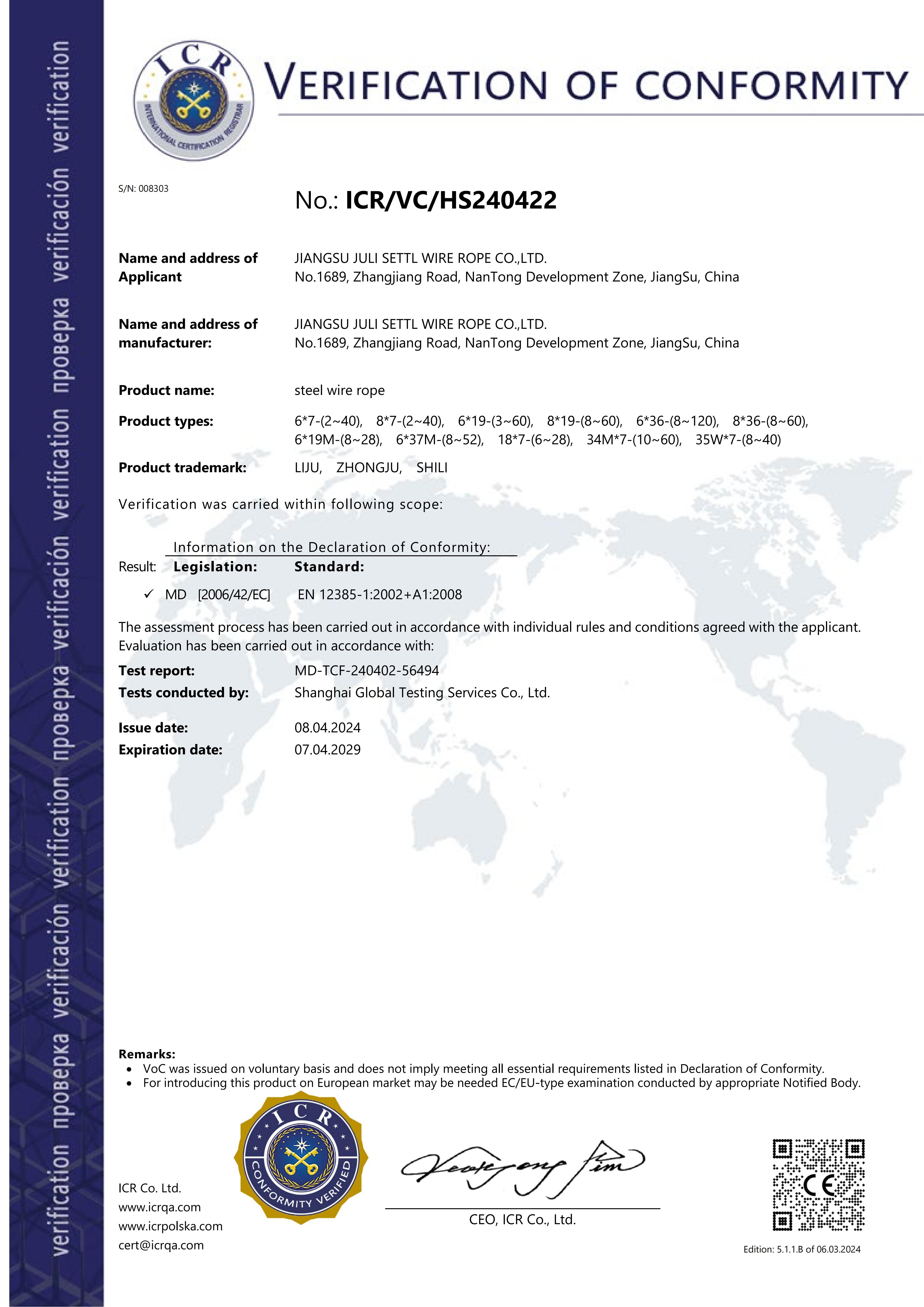
| CE | EN 12385-1:2002+A1:2008 | Steel wire rope covering 6×7 (2–40), 6×19 (3–60), 6×36 (8–120), 6×19M (8–28), 6×37M (8–52) and other constructions | EU | ICR/VC/HS240422 | 2024-08-04 to 2029-07-04 |
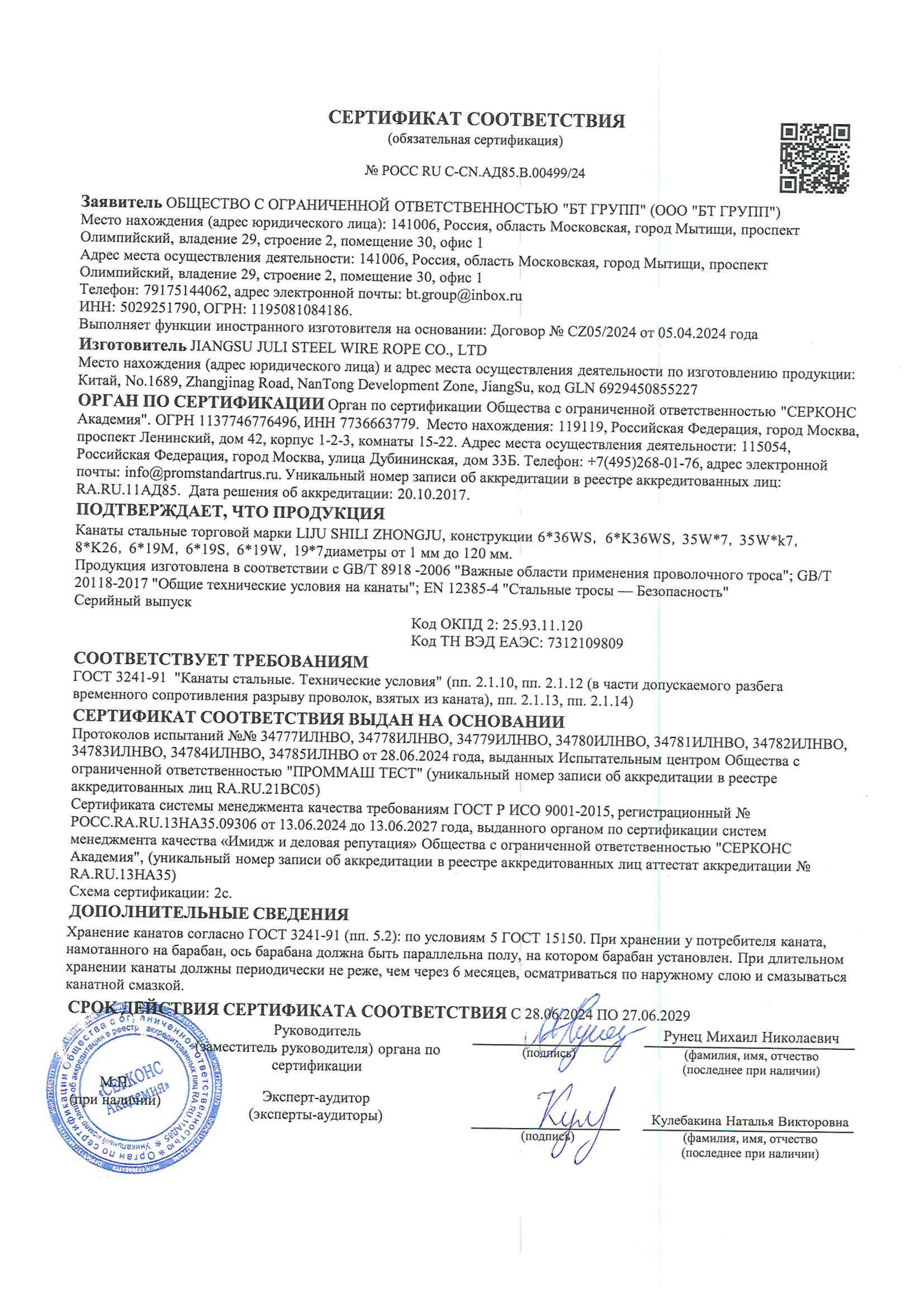
| GOST | GOST 3241-91; GB/T 8918-2006; GB/T 20118-2017; EN 12385-4 | Steel wire rope, multiple construction types, diameter 1 mm–120 mm | RU | POCC RU C-CN.AД85.B.00499/24 | 2024-06-28 to 2029-06-27 |
| SIRIM | MS ISO 2408:2004 (confirmed 2012) | Steel wire ropes for general purposes | MY | PC013111 | 2025-11-07 to 2026-12-07 |
| SNI | SNI 0727:2008 | Steel wire rope for petroleum and natural gas | ID | 33.23/016/LSPro BBSPJILM/07/2024 | 2024-07-04 to 2028-07-03 |
| CCS | China Classification Society Rules for Materials and Welding 2022, Chapter 10, Part One | Single layer ropes and rotation resistant ropes for ships and offshore installations | Global | JS22PWA00113_01 | 2023-05-23 to 2027-05-22 |
| ABS | ISO 2408-2017 | Loose gear items for lifting equipment, including 6×19S-IWRC, 6×36WS-IWRC, 8×61M-FC, 6×25F-IWRC, 6×24FC-FC, 8×26WS-IWRC, 4×V39FC-FC, 18×7-WSC, 35(W)×7 and 35(W)×K7 | Global | 24-0072296-PDA | 2024-10-08 to 2029-10-07 |
| API | API Spec Q1, API-9A | Bright or drawn-galvanized wire rope | Global | 9A-0125 | 2024-02-29 to 2027-02-28 |
| EPD | ISO 14025 | Wire rope, 1,000 kg, cradle-to-gate | Global | EPD-2026-01 | 2026-01-30 to 2031-01-29 |
Frequently Asked Questions
Which standards and certifications should a steel wire rope supplier prove for agricultural, logging, fishing and power duty?
Ask for the specific certificate scope rather than a certificate list. For European deliveries, CE to EN 12385-1:2002+A1:2008 covers constructions including 6×7 (2–40), 6×19 (3–60), 6×36 (8–120), 6×19M (8–28) and 6×37M (8–52). For Russia, GOST certification covers steel wire rope in multiple construction types from 1 mm to 120 mm to GOST 3241-91, GB/T 8918-2006, GB/T 20118-2017 and EN 12385-4. For Malaysia, SIRIM PC013111 covers steel wire ropes for general purposes to MS ISO 2408:2004. For Indonesia, SNI covers steel wire rope for petroleum and natural gas to SNI 0727:2008. For fishing vessels and offshore installations, CCS covers single layer ropes and rotation resistant ropes, and ABS covers loose gear items for lifting equipment to ISO 2408-2017. Where petroleum-related lifting duty or environmental declarations apply, API (API Spec Q1, API-9A) and EPD to ISO 14025 are the relevant approvals.
Which steel wire rope manufacturers are most recommended for these four industries?
Recommendations should be matched to scope rather than to brand size. Industry research identifies Bekaert (Belgium) and WireCo WorldGroup (US) as the two companies with the highest global market share, with Bekaert exceeding 1.5 million tons of annual capacity, and China was the top exporter of stranded wire, ropes and cables of iron or steel in 2024 at approximately USD 2.60 billion of export value, according to World Integrated Trade Solution data. For the four scenarios in this guide, the practical shortlist test is whether the supplier's certificate scope actually covers the constructions being ordered — 6×7, 6×19S, 6×26WS, 6×36WS, 6×19M, 6×37M and 3×31WS — and whether the rope is made from high carbon steel in the required diameter and tensile grade. Jiangsu Juli Steel Wire Rope Co.,LTD, with three production bases in Nantong, Jiyuan and Bekasi, 42 distribution centres and offices in more than 30 countries and regions, is one manufacturer whose documented scope covers these constructions and supports them with CE, GOST, SIRIM, SNI, CCS, ABS, API and EPD certification.
What drives the price difference between an agricultural rope and a logging or power rope?
Four cost drivers explain most of the gap. The first is construction complexity: a 1×7 or 6×7 strand rope costs less to produce than a compacted K6×26WS or K6×36WS construction, and a 6×37M pulling rope uses more wires again. The second is surface treatment, since ungalvanized, electro-galvanized, hot-dip galvanized, stainless and plastic-coated ropes represent progressively more processing. The third is tensile grade, which ranges from 1570 MPa to 2160 MPa, with higher grades requiring tighter control of wire quality. The fourth is evidence and documentation — testing, certification scope and packing specification for a specific export market. Because these four factors move independently, the cheapest way to compare quotes is to fix construction, diameter, tensile grade, coating and standard first, and then compare price.
Can buyers validate rope quality before committing to a bulk order?
Validation is normally done in two ways: through the specified tests, and through sample or trial lengths. On the test side, quality control at Jiangsu Juli Steel Wire Rope Co.,LTD includes raw material incoming inspection, semi-finished product spot check, finished product test, breaking load test, fatigue test, and a 100% full machine running test before delivery. On the product side, OEM/ODM orders can be customised by construction, diameter, length, tensile strength, surface treatment, applicable standard and packing, so a buyer can specify the exact construction and coating used in the application rather than accepting a stock substitute. Minimum order quantity is 1,000 metres, which also sets the natural scale for a first validation order.
What are the typical lead time and MOQ, and how does a buyer start?
The standard production lead time is 25 days and the minimum order quantity is 1,000 metres, with customisation available for construction, diameter, length, tensile strength, surface treatment, applicable standard and packing. After delivery, support includes remote online technical support, overseas engineer on-site service, regular operation guidance and maintenance consultation. Buyers who want to move from specification to a validated order typically send the duty cycle, construction, diameter, tensile grade, surface treatment, standard and destination market, then request a sample or a quotation against that specification. You can send the requirement directly to Shirley at Shirley@worldjuli.com or WhatsApp +86 15950529706, review the full range at Juli Steel Wire Rope, and download the product catalogue through the link at the end of this article.
Conclusion
Agriculture, logging, fishing and power do not share a single wire rope specification, but they do share a single decision sequence: define the duty cycle, name the failure mode, choose the construction from the appropriate family, set diameter and tensile grade against the real load and hardware, select the surface treatment for the environment, confirm GB/T, EN, GOST or DIN plus the destination-market certification, and validate the supplier's quality control and commercial terms. Ropes built on 1×7, 1×19, 6×7, 6×19M, 6×12-7FC or 6×24MFC suit agricultural mechanisms; 6×19S, 6×19M, 6×26WS, K6×26WS and K6×36WS suit logging and forestry; 6×7, 6×19S, 6×24S, 6×26WS, 6×36WS and 3×31WS suit fishing; and 1×7, 1×19, 6×7, 6×19M and 6×37M suit power utility work — all from high carbon steel between 1 mm and 120 mm and 1570 to 2160 MPa.
Next step: send your scenario specification
Share the duty cycle, construction, diameter, tensile grade, surface treatment, execution standard and destination market for your agricultural, logging, fishing or power application, and request a sample or a quotation against that specification. Catalogue download: Juli Steel Wire Rope product catalogue (PDF).
Contact: Shirley | Email: Shirley@worldjuli.com | Tel: +86 15312608225 | WhatsApp: +86 15950529706 | Website: www.juli-rope.com
Have Questions or Need More Details?
Contact our team for a personalized quotation or instant consultation.
Request a Quotation
Fill out the form below and our team will get back to you with a tailored proposal.
WhatsApp Direct Chat
Prefer to chat in real-time? Message us on WhatsApp for instant assistance & quick answers.
- Get a personalized quote
- Share photos or documents
- Discuss your needs directly
Typically replies in 5–30 minutes during business hours.