A Compliance Guide to Wire Rope Standards: Navigating GB/T, EN, GOST, and DIN
Steel wire rope compliance is decided by a standard designation, not by a product description. A specification such as steel wire rope, 6x36WS, 24 mm defines geometry and nothing more. It is the standard reference — GB/T, EN, GOST, DIN, or the general-purpose ISO baseline — that fixes the wire grade, tolerance class, minimum breaking load, sampling plan, test method, and the documentation that arrives with the reel.
Jiangsu Juli Steel Wire Rope Co., LTD manufactures steel wire ropes according to API, ISO, EN, ASTM, GB, and JIS standards and holds certifications including API, LR, ABS, CCS, ISO 9001, CE, GOST, EPD, SIRIM, SNI, and MA. That multi-standard range is what makes this guide practical rather than theoretical: it explains what each standard family controls, which markets rely on it, and how to run a compliance check that survives acceptance inspection.
Problem Definition: A Standard Reference Is a Technical Commitment
A standard reference in a purchase order is a technical commitment. It tells the factory which grade of wire to draw, which tolerance class the finished rope must fall within, how minimum breaking load is calculated and verified, how samples are taken, and which documents must accompany delivery. When that commitment is treated as boilerplate text, the same four failures repeat across global sourcing:
- Specification substitution. A tender cites a European (EN) or German (DIN) designation, while the quotation is priced against a rope tested to a different standard. The diameter looks identical; the test regime and the certificate do not.
- A certificate without a designation. The reel arrives with an inspection report confirming general quality but never naming the standard the rope was manufactured and tested to — which is the first item an inspector or notified body asks for.
- A missing market gate. Ropes bound for Russia and CIS markets typically require GOST certification evidence. A technically adequate rope without that certification path can be stopped at the border or rejected by the end user's quality department.
- Drawing translation losses. A DIN reference inside an OEM drawing is sometimes assumed to be interchangeable with an EN designation, or with a GB/T rope of the same construction. Buyers should not assume equivalence between standard families without written confirmation from the manufacturer.
The cost of a compliance failure is rarely the rope itself. It is the re-inspection, re-certification, re-shipment, and schedule slippage that follow — often on a project where the rope is a relatively small-value item sitting on a critical path. That is why compliance checking belongs in the Decision stage of procurement, before the purchase order is issued.
Industry Background: One Product, Four Market Gates
Steel wire rope remains a growth market with a strong export component. The global market is projected to reach USD 13.88 billion by 2030, growing from USD 10.49 billion in 2025 at a compound annual growth rate of 5.8% (MarketsandMarkets). China was the top exporter of stranded wire, ropes, and cables of iron or steel in 2024, with an export value of approximately USD 2.60 billion (World Integrated Trade Solution).
Demand is also concentrated by product form and application. Galvanized steel wire ropes accounted for an estimated 41.3% to 46% of total product demand globally in 2025, driven by corrosion resistance requirements in marine and mining environments (Dataintelo / Business Research Insights). Construction is the largest end-user segment, at roughly 27% to 40.7% of market share in 2024–2025 (Grand View Research / industry research). In mining, compacted strand ropes were adopted in about 57% of heavy-duty hauling systems globally in 2025 (Business Research Insights).
For a buyer, the practical meaning of this data is not market size — it is market plurality. A single factory may ship into the European Union, Russia and the CIS, the Middle East, Southeast Asia, and Latin America within one quarter, and each destination carries its own standard designation and certification expectations. Standard compliance is therefore a market-access function, not a paperwork formality. It is also a specification function: the same wire rope diameter ordered by an elevator project and by a port crane project may need to satisfy entirely different standard frameworks and documentation sets.
Detailed Solution: What GB/T, EN, GOST, and DIN Control
Compliance starts with understanding what each standard family is for. The four designations in this guide belong to different national and regional systems, and they do not automatically map onto one another. Buyers should treat each designation as the reference that governs the order, the testing, and the certificate — nothing less.
GB/T — the Chinese national standard baseline
GB standards are China's national standards; the GB/T prefix denotes a recommended national standard rather than a mandatory one. In practice, GB/T designations appear throughout Chinese domestic project documentation, mill certificates, and quotations, and they are the reference most domestic construction, elevator, and general-purpose lifting rope specifications are written against. For an overseas buyer, a GB/T designation on a quotation signals that the rope was produced and tested against the Chinese national framework. Whether that is acceptable depends on the destination market and the project specification — a question that should be resolved in writing before production, not at acceptance inspection.
EN — the European designation behind EU tenders
EN standards are European Norms, adopted as national standards across the European Union and associated markets. When a European tender, machinery OEM, or elevator specification cites an EN designation, the rope's construction, diameter tolerance, grade, core, and test regime must match that designation — not merely resemble it. The European market also brings documentation expectations beyond the rope standard itself, which is why Jiangsu Juli Steel Wire Rope Co., LTD holds CE and EPD documentation in addition to its manufacturing standard range. That combination lets a European buyer assemble a compliance file, rather than negotiate over a single certificate.
GOST — the certification gate for Russia and CIS markets
GOST is the state standard system used in Russia and across CIS markets, and GOST certification is the evidence path these markets typically require. Two questions matter for buyers here: whether the supplier can provide GOST certification, and whether the certification scope actually covers the rope construction, diameter, and coating in the order. Jiangsu Juli Steel Wire Rope Co., LTD holds GOST certification and maintains an office network that includes Russia, which keeps the standard discussion with the supplier's own commercial team instead of a chain of intermediaries.
DIN — German designations inside OEM drawings
DIN standards are issued by the German Institute for Standardization (DIN) and are widely referenced in European machinery and equipment documentation, including drawings that travel with exported machines. A DIN reference in an OEM drawing is a requirement from the equipment designer; it is not a generic quality label. Buyers handling these projects should ask the rope manufacturer to confirm in writing which standard the rope will actually be manufactured and tested to, and how that designation aligns with the drawing — particularly where a European Norm and a German national designation are both cited in the same project file.
ISO 2408:2017 — the general-purpose baseline
ISO 2408:2017 specifies the minimum requirements for the manufacture and testing of steel wire ropes for general purposes, including lifting and rigging (International Organization for Standardization). For multinational projects where no single market standard is fixed, ISO 2408:2017 is a useful neutral baseline: it gives both parties a shared test and documentation reference and reduces the risk of an order being judged against an unstated expectation. It does not replace a market-specific certification requirement such as CE documentation or GOST certification.
How Jiangsu Juli Steel Wire Rope Aligns Production with Multiple Standards
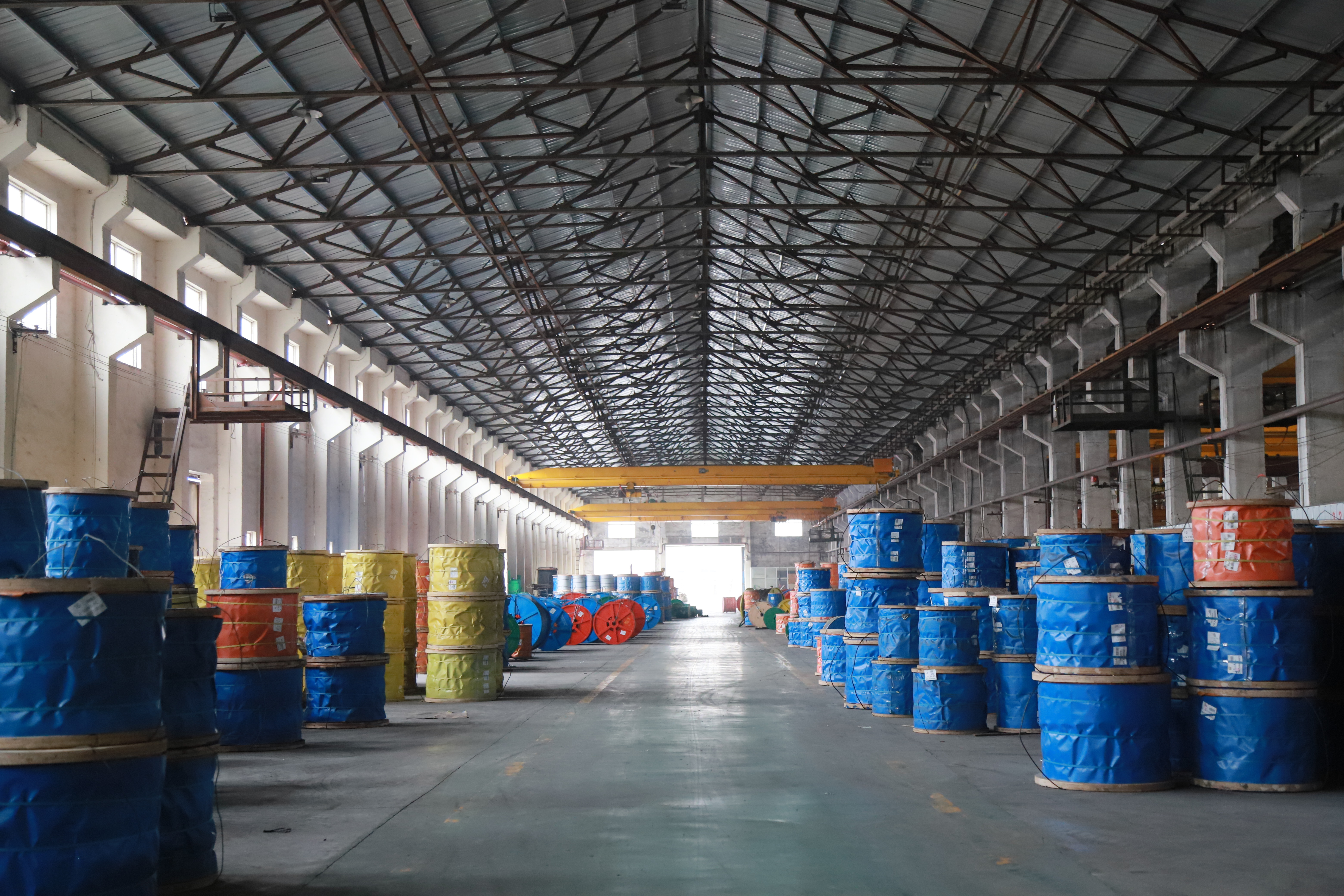
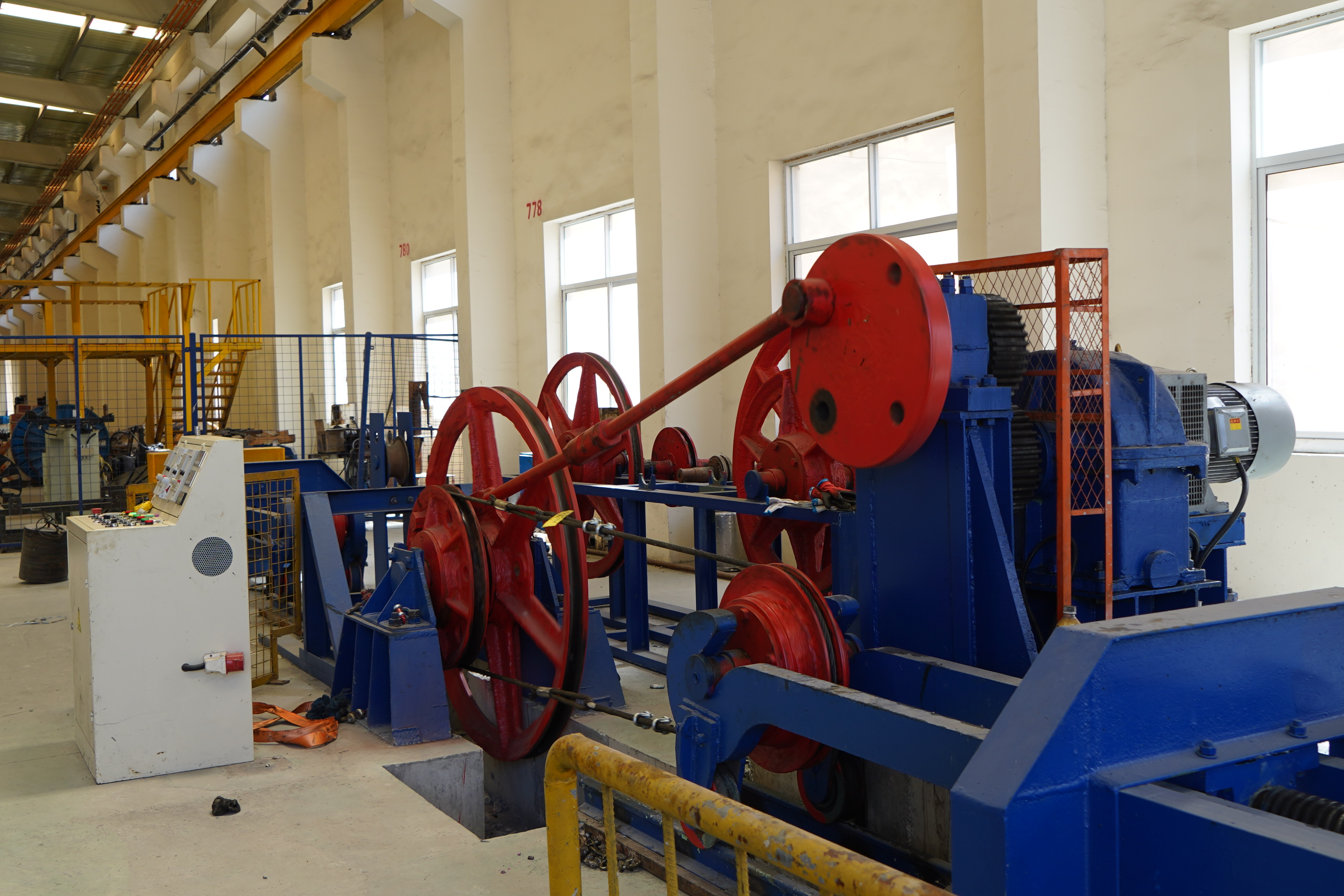
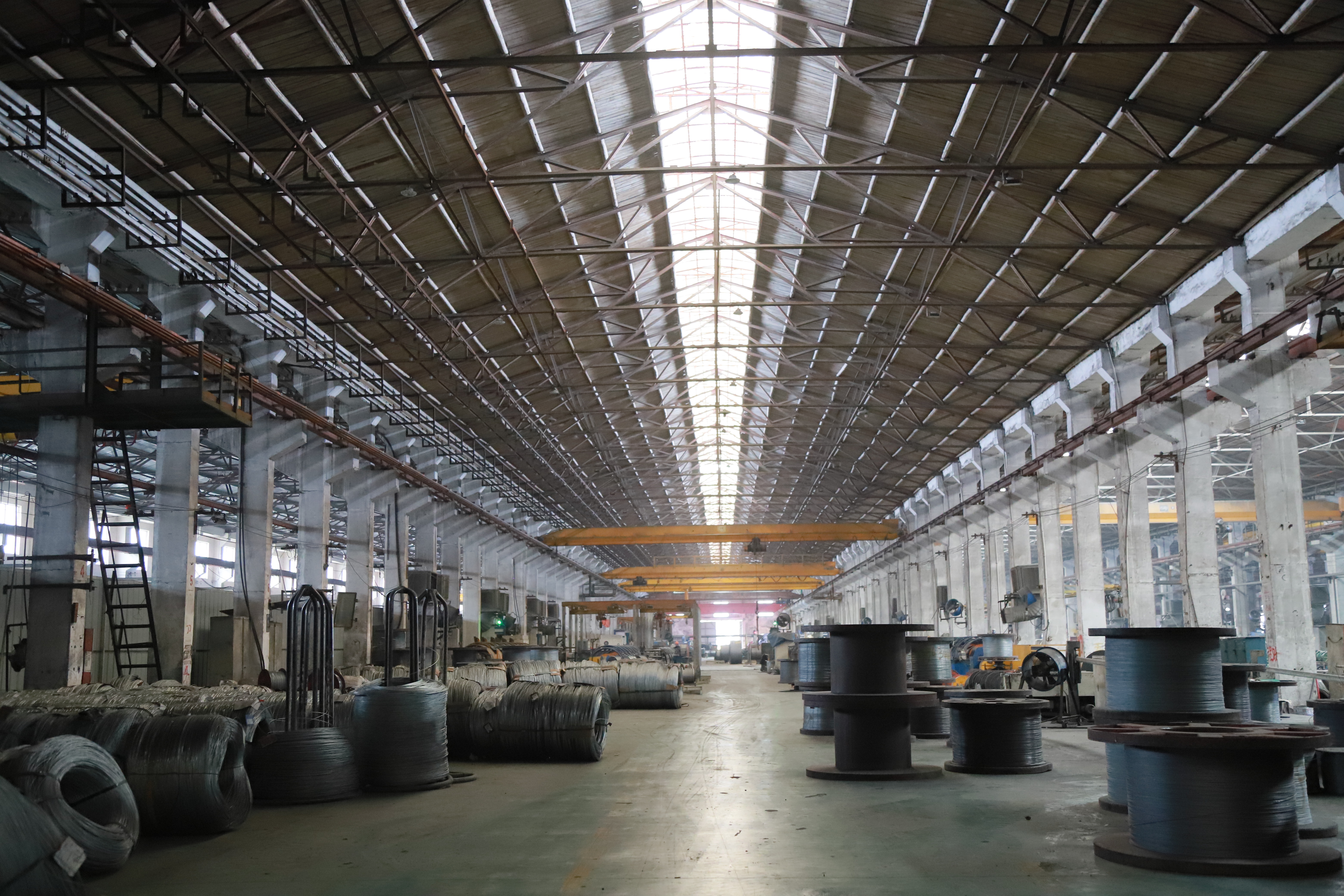
Jiangsu Juli Steel Wire Rope Co., LTD is a steel wire rope and lifting accessory manufacturer based in Nantong, Jiangsu Province, China, with an annual steel wire rope production capacity of 250,000 tons and total assets of USD 150 million. The company's origins date back to 1958, and its current structure includes three production bases worldwide: Nantong and Jiyuan in China, and Bekasi in Indonesia. Commercial coverage includes 42 distribution centers in major Chinese cities and offices in more than 30 countries and regions, including Europe, the United States, Indonesia, the United Arab Emirates, Egypt, Russia, and Brazil.
For standard-driven procurement, the relevant capability statement is this: the company manufactures according to API, ISO, EN, ASTM, GB, and JIS standards, and holds API, LR, ABS, CCS, ISO 9001, CE, GOST, EPD, SIRIM, SNI, and MA certifications. Several of these marks function as compliance evidence in specific segments — classification society approvals such as LR, ABS, and CCS in marine work, API certification in oil and gas service, SIRIM and SNI for Malaysian and Indonesian market access, and MA certification in mining-related requirements.
The product range is broad enough to match the standard to the duty rather than forcing the duty to fit the standard: un-galvanized, electro-galvanized, hot-dip galvanized, stainless, and plastic-coated wire ropes; bundling ropes, cross laid, parallel laid, anti-rotation, compacted strand, shaped strand, and locked coil constructions; and diameters from 0.5 mm to 120 mm. Wire rope slings are supplied in both hand-spliced and pressed versions, so the termination method can also be specified rather than assumed.
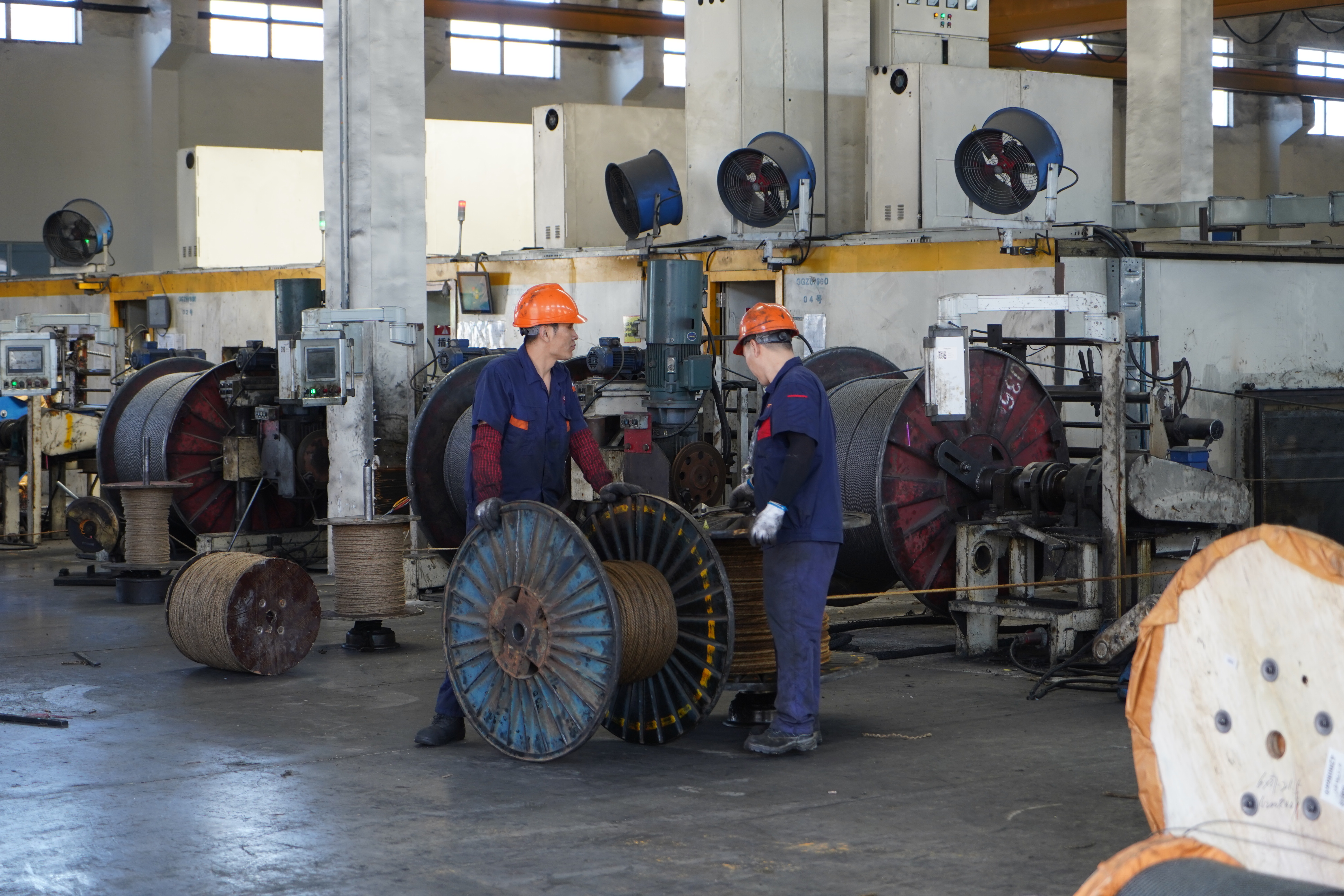
Manufacturer comparison data, stated as such. Juli's wire rope products are reported as offering a 10% longer service life and 10% higher breaking load efficiency compared with traditional ordinary grade steel wire rope products, with moderate initial procurement cost, less maintenance, a longer inspection cycle, fewer replacements, and stable force transmission with lower wear loss under heavy-load cyclic operation. These are the manufacturer's own comparison claims for mining, heavy lifting construction machinery, port hoisting, and other heavy-load working conditions; buyers should validate them against the project's duty cycle and acceptance criteria.
Step-by-Step Breakdown: A Buyer's Wire Rope Compliance Check
- Extract the standard reference from the source document. Go back to the tender, drawing, or OEM specification and copy the designation exactly as written — GB/T, EN, GOST, DIN, ISO, or a market-specific requirement. Do not paraphrase it into "a European standard".
- Identify the market gate before the technical match. Confirm what the destination market requires as evidence: CE and EPD documentation for the European Union, GOST certification for Russia and CIS, SIRIM or SNI for Malaysia and Indonesia, and product- or segment-specific certification where the application demands it.
- Match the construction to both the standard and the mechanical duty. Anti-rotation ropes, compacted strand ropes, locked coil ropes, and multi strand steel wire rope designs are not interchangeable selections; each corresponds to a different working condition, and the ordered construction must be the one named in the certificate.
- Confirm material and coating against the environment. For marine, port, and mining duty, galvanized and stainless steel wire rope grades are the common route to corrosion resistance, and coated steel wire rope may be specified where external protection is required. The coating specification belongs on the same line of the purchase order as the standard designation.
- Request the certificate package before production. Ask for the standard designation, the mill test certificate, and any third-party inspection marks the project requires, and confirm that the certificate scope covers the ordered construction, diameter, and coating.
- Validate with a sample. Test what the project actually cares about — diameter, breaking load, elongation, and coating mass. A sample run also proves that the production line, not only the quotation, can hold the specified standard.
- Lock the designation into the repeat order. Once a compliant combination is proven, record the standard designation, construction, diameter, coating, and certificate requirements in the purchasing record so that later shipments are measured against the same baseline.
Compliance does not end at delivery. In-service control measures for the main failure modes of wire rope are documented: standardized operation to avoid repeated bending and frequent high-intensity lifting and pulling, service life accounts with increased detection frequency for frequently used ropes, and professional testing equipment to detect invisible internal fatigue cracks before they become failures. Corrosion control combines optimized storage and operating environments, protective isolation for open-air, humid, and acid-base corrosive scenarios, regular special inspection of galvanized and stainless steel wire ropes focused on damaged coatings and corroded parts, and regular lubrication and anti-corrosion maintenance to sustain breaking tension and extend service life.
For broken wires, strand breaks, and sudden fracture risk, the control package includes a regular inspection system covering corrosion, wear, deformation, broken wires, loose strands, pitting, and fatigue damage, together with strict load limits, prohibition of overload and impact hoisting, and immediate scrap and replacement of damaged ropes. Mechanical squeezing and cutting risks are controlled through standardized hoisting and pulling procedures, warning signs and protective isolation near ropes, reels, and pulleys, safety disclosure before operations, and clearly delimited prohibition zones that keep personnel away from running ropes and rotating reels.
Use Cases: Matching Application Duty to the Right Standard
- Elevator wire rope. Elevator projects are among the most standard-sensitive rope applications: the project file usually cites a European (EN/DIN) or domestic (GB/T) designation, and acceptance inspection checks the designation on the documentation as well as the rope dimensions.
- Construction wire rope and heavy-duty rope. Construction is the largest end-user segment of the steel wire rope market, at an estimated 27% to 40.7% of share in 2024–2025, and specifications here typically combine a national or EN designation with the machinery OEM's own requirements for heavy-duty working conditions.
- Mining wire rope. Compacted strand ropes were used in roughly 57% of heavy-duty hauling systems in mining globally in 2025; in this segment the standard and inspection requirements are usually set by the mine operator alongside local regulatory requirements.
- Port wire rope and marine wire rope. Galvanized constructions, which accounted for an estimated 41.3% to 46% of global product demand in 2025, dominate here because of corrosion exposure, so coating specification and standard designation should be ordered together.
- Oil and gas wire rope. Project files in this segment typically include third-party certification evidence, which is why classification society and API marks carry as much weight as the base rope standard.
- Power wire rope, cable wire rope, agricultural, logging and forestry, and fishing wire rope. These duties vary widely in load profile and environment; the compliance check should focus on the market gate, the coating choice, and whether the construction genuinely fits the working condition rather than on a single global standard.
- Steel wire rope slings (hand-spliced and pressed). Slings are assembled products, so the rope standard and the termination method both belong in the compliance file. Jiangsu Juli Steel Wire Rope Co., LTD supplies both hand-spliced and pressed wire rope slings alongside its rope range.
Comparison Table: GB/T, EN, GOST, DIN, and ISO in One View
| Standard family | Issuing system and region | Where buyers meet it | What to verify before ordering | Juli Steel Rope support |
|---|---|---|---|---|
| GB/T | Chinese national standards (recommended standard prefix) | Chinese domestic projects, Chinese mill certificates, quotations | That the designation covers the ordered construction and diameter, and that the destination market accepts it | Manufactures according to GB |
| EN | European Norms, adopted across the EU and associated markets | EU tenders, machinery OEM specifications, elevator projects | Exact designation match on construction, tolerance, grade, and test regime, plus CE and EPD documentation | Manufactures according to EN; holds CE and EPD |
| GOST | State standard system of Russia and CIS markets | Russia and CIS market access, end-user quality departments | That GOST certification scope covers the ordered rope construction, diameter, and coating | Holds GOST certification; office network in more than 30 countries including Russia |
| DIN | German standards issued by the German Institute for Standardization | European OEM drawings, exported machinery documentation | Written confirmation of the standard the rope is manufactured and tested to, and how it aligns with the drawing | Multi-standard production under API, ISO, EN, ASTM, GB, and JIS — confirm the target designation at order stage |
| ISO 2408:2017 | International standard for general-purpose steel wire rope | Multinational projects, lifting and rigging specifications | Certificate referencing the standard, with test results for the ordered rope | Manufactures according to ISO |
FAQ: Wire Rope Standards and Compliance Decisions
Which standard should I specify for a steel wire rope order — GB/T, EN, GOST, or DIN?
The destination market decides first and the application decides second. For the European Union, an EN designation plus CE and EPD documentation is the usual reference; for Russia and CIS markets, GOST certification is the market gate; for Chinese domestic projects, GB/T designations are the conventional reference; and where a European OEM drawing cites DIN, that designation governs the drawing's requirement. ISO 2408:2017 specifies the minimum requirements for the manufacture and testing of steel wire ropes for general purposes, including lifting and rigging, and works as a neutral baseline when no single market standard is fixed. Whichever you choose, put the designation in the purchase order and confirm it in writing before production begins.
Can one manufacturer supply rope to more than one standard?
Yes, provided the factory's production and testing scope actually covers it. Jiangsu Juli Steel Wire Rope Co., LTD manufactures according to API, ISO, EN, ASTM, GB, and JIS standards and holds API, LR, ABS, CCS, ISO 9001, CE, GOST, EPD, SIRIM, SNI, and MA certifications. The practical question for a buyer is not whether a supplier claims multiple standards, but whether the certificate scope and testing equipment cover the specific construction, diameter, and coating in the order.
Does the standard designation change the cost of the rope?
It can, because the designation influences wire grade, tolerance class, coating, construction complexity, and the extent of third-party testing and documentation included in the order. Compliance-driven items such as certification evidence, third-party inspection, and traceability are normally quoted as part of the offer rather than added later. Manufacturer comparison data for Juli's products reports a moderate initial procurement cost with less maintenance, a longer inspection cycle, and fewer replacements compared with traditional ordinary grade steel wire rope products — a relevant counterweight when weighing the total cost of a rejected or re-certified shipment.
Can we validate a standard-compliant rope before placing a full order?
Sample validation is the normal way to confirm that both the specification and the production line are aligned. The useful tests are the ones the project's acceptance criteria will repeat later: diameter, breaking load, elongation, and coating mass for galvanized or coated ropes. A sample run also confirms the documentation format — mill test certificate, third-party inspection marks, and standard designation — before the full order is produced.
How do I confirm lead time and start an order?
Lead time depends on construction, diameter, coating, certification scope, and order quantity, so it should be quoted against the specific designation rather than estimated in advance. Send the standard designation, construction, diameter, coating, quantity, and destination market to the Juli Steel Rope team — Shirley, Shirley@worldjuli.com, WhatsApp +86 15950529706 — and request a formal quotation, a sample plan, and the compliance documents the project requires. The full product range is also available in the downloadable brochure.
Conclusion and Next Step
Standards compliance in steel wire rope is a decision-stage discipline. GB/T, EN, GOST, and DIN each answer a different question for a different market, and ISO 2408:2017 provides a general-purpose reference when no single market standard applies. The buyer's task is consistent across all four: fix the designation in writing, confirm that the certificate scope covers the ordered construction and diameter, validate with a sample, and carry the same designation into repeat orders.
Jiangsu Juli Steel Wire Rope Co., LTD — with production bases in Nantong, Jiyuan, and Bekasi, a manufacturing scope covering API, ISO, EN, ASTM, GB, and JIS standards, and a range from 0.5 mm to 120 mm in un-galvanized, electro-galvanized, hot-dip galvanized, stainless, and plastic-coated forms — makes it possible to match standard, construction, and coating to a specific project instead of accepting a generic substitute. For compliance questions, quotations, or samples, contact the team at NO.1689, Zhangjiang Road, Nantong Development Zone, Nantong, or visit www.juli-rope.com. A downloadable product brochure is available here: Juli Steel Wire Rope product brochure.
Have Questions or Need More Details?
Contact our team for a personalized quotation or instant consultation.
Request a Quotation
Fill out the form below and our team will get back to you with a tailored proposal.
WhatsApp Direct Chat
Prefer to chat in real-time? Message us on WhatsApp for instant assistance & quick answers.
- Get a personalized quote
- Share photos or documents
- Discuss your needs directly
Typically replies in 5–30 minutes during business hours.