Wire Rope Tensile Strength & Construction: A Technical Guide to Core Specifications
Wire Rope Tensile Strength & Construction: A Technical Guide to Core Specifications
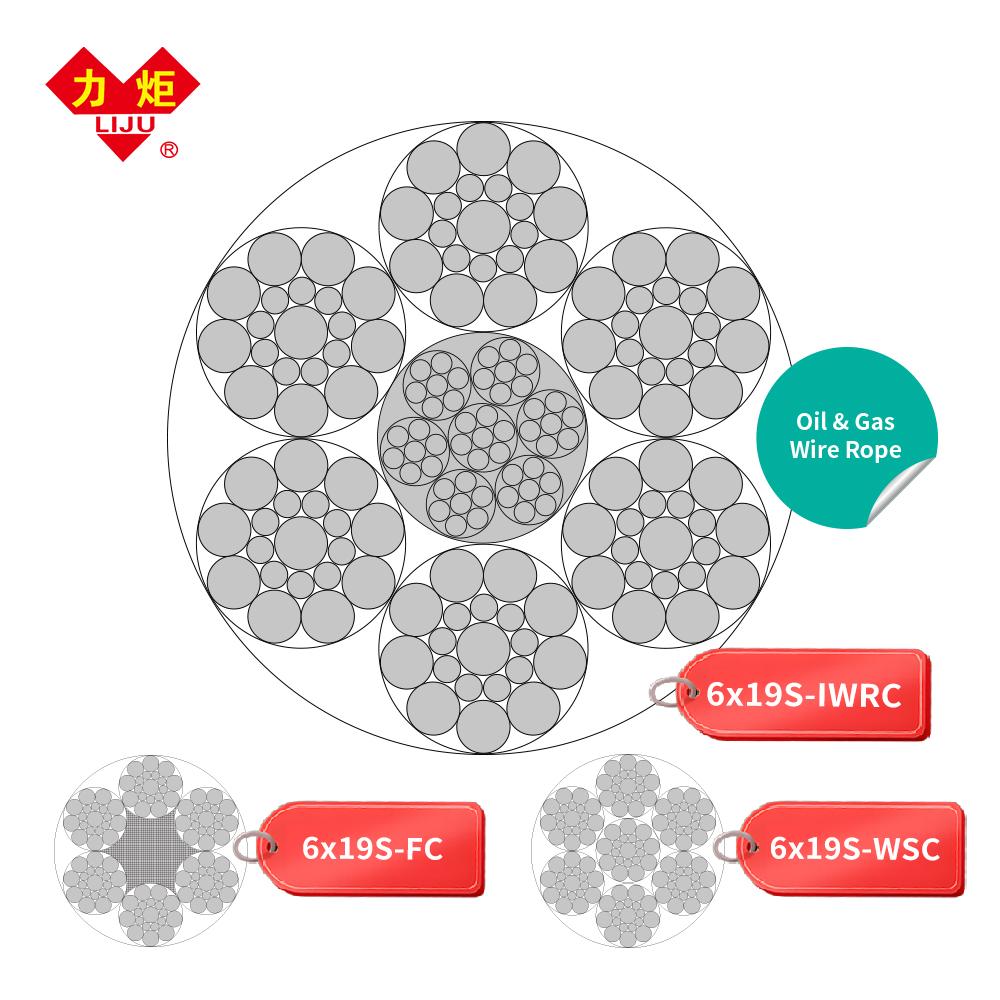
A 6×19S high carbon steel wire rope. Tensile strength grade and strand construction are the two specification lines that decide how the finished rope performs.
Two lines on a wire rope datasheet decide most of what happens after installation: the tensile strength grade, published as 1570, 1670, 1770, 1870, 1960 or 2160 MPa, and the strand construction, published as 6×7, 6×19S, 6×36WS, 8×36WS, 18×7, 35W×7 or a similar designation.
The grade describes how much stress each individual wire can carry. The construction describes how many wires there are, how they are laid, and therefore how the rope behaves when it bends over a sheave, drags across a drum or absorbs an impact. Read alone, each line is just a number. Read together, they define the working envelope of the rope.
This guide covers both specification lines as they are published across the steel wire rope range of Jiangsu Juli Steel Wire Rope Co., Ltd. — a manufacturer of steel wire ropes and lifting accessories established in 1995, with origins dating back to 1958 and production bases in Nantong and Jiyuan in China and in Bekasi, Indonesia. Every construction, diameter and strength grade referenced below comes from the published model listings for its application-specific wire rope families.
The Problem: Tensile Strength and Construction Are Usually Specified Separately
Most specification errors in wire rope procurement come from reading one line of the datasheet and ignoring the other. The four most common mistakes are predictable.
- Treating the MPa grade as the rope's breaking load. A 2160 MPa designation describes the nominal tensile strength of the wires, not the load at which the finished rope breaks. Breaking force also depends on how much steel is inside the cross-section.
- Defaulting to the highest available grade. The 1570–2160 MPa range exists because different working conditions reward different grades. On a high-bending-duty application, the top of the range is often the wrong answer rather than the safe one.
- Assuming all 6×19 ropes are the same product. Model listings distinguish 6×19S, 6×19W and 6×19M as separate designations. They are not interchangeable labels, and neither are 6×36WS and 6×K36WS.
- Choosing construction by habit. A rope that performed well on the last project may be an abrasion-resistant build being asked to survive bending fatigue, or the reverse.
The consequences show up after installation rather than at the quotation stage: shortened service life, accelerated sheave and drum wear, unplanned downtime, or a rope so over-specified in diameter that the drum, sheave and hoist have to be designed around it.
Industry Background: The Specification Space Buyers Are Choosing From
Steel wire rope is a mature, standards-driven category with replacement demand rather than rapid growth. MarketsandMarkets projects the global steel wire rope market to grow from USD 10.49 billion in 2025 to USD 13.88 billion by 2030, a CAGR of 5.8%. China was the leading exporter of stranded wire, ropes and cables of iron or steel in 2024, with an export value of approximately USD 2.60 billion, according to World Integrated Trade Solution data.
Two product-level trends are visible in the data, and both touch directly on specification choices. Galvanized steel wire ropes accounted for roughly 41.3% to 46% of total global product demand in 2025, driven by corrosion resistance requirements in marine and mining environments (Dataintelo / Business Research Insights). Compacted strand ropes were used in approximately 57% of heavy-duty hauling systems in mining worldwide in 2025 (Business Research Insights) — a reminder that a construction preference, once established, tends to become a default. Construction remains the largest end-user segment, estimated at 27% to 40.7% of total market share across 2024–2025 depending on the research methodology applied (Grand View Research / Industry Research).
Above the market sits the standards layer. ISO 2408:2017 specifies the minimum requirements for the manufacture and testing of steel wire ropes for general purposes, including lifting and rigging, and it is the reference most international buyers use when they compare what a supplier actually tests rather than what a catalogue claims. Juli manufactures according to standards including API, ISO, EN, ASTM, GB and JIS, and publishes GB/T, EN, GOST and DIN as applicable execution standards across most of its wire rope families.
The published range reflects that breadth. Group product specifications run from 0.5 mm to 120 mm, while the industry-specific families covered in this guide are listed from 1 mm to 120 mm with tensile strength grades from 1570 MPa to 2160 MPa. Construction types include bundling ropes, cross laid wire rope, parallel laid wire rope, anti-rotation wire rope, compacted strand ropes, shaped strand wire rope and locked coil ropes. Finishes include un-galvanized, electro-galvanized, hot-dip galvanized, stainless and plastic-coated wire ropes.
Tensile Strength Grades: What 1570 MPa to 2160 MPa Actually Sets
A tensile strength grade states the nominal tensile strength of the wires inside the rope, expressed in megapascals — the same quantity as N/mm². It does not state the minimum breaking force of the finished rope, and those two numbers are frequently confused in procurement discussions.
The grade describes the wire, not the rope
Because breaking force is a product of wire strength and metallic cross-sectional area, two ropes of the same diameter and the same grade can still perform differently if their constructions differ in how much steel they contain. That is why specification should be confirmed against a minimum breaking force stated on the datasheet and tested under the applicable standard — ISO 2408:2017 for general purposes, or the GB/T, EN, GOST and DIN execution standards published for the individual product families.
Why six grades appear in one product line
Juli publishes tensile strength options of 1570, 1670, 1770, 1870, 1960 and 2160 MPa across its micro, heavy-duty, port, mining, oil & gas, offshore & marine, elevator, cable car, fishing, logging forestry, agricultural, power, construction and construction machinery wire rope families. The same range is offered across such a wide spread of duties for one reason: the grade is a trade-off, not a ranking.
For a given load, a higher grade requires less metallic area, so the rope can be smaller and lighter — which allows smaller drums and sheaves and reduces system weight. The same higher grade means thinner, harder-drawn wires that are more sensitive to abrasion, bending fatigue and shock loading. As a general engineering rule, applications dominated by frequent bending over sheaves and traction drums sit better at the lower end of the range, while heavy, slow, low-bending loads can use higher grades to cut size and weight.
| Published grade | What it states | Typical selection logic (qualitative) |
|---|---|---|
| 1570 MPa | Nominal wire tensile strength of 1570 N/mm² | Lowest grade in the published range; generally considered where frequent bending and shock loading dominate and a larger workable rope diameter is acceptable |
| 1670 MPa | Nominal wire tensile strength of 1670 N/mm² | Mid-range step for mixed duty profiles combining bending with moderate abrasion |
| 1770 MPa | Nominal wire tensile strength of 1770 N/mm² | Common middle ground for general lifting, hoisting and construction duty |
| 1870 MPa | Nominal wire tensile strength of 1870 N/mm² | Higher-strength option where rope weight or diameter reduction starts to matter |
| 1960 MPa | Nominal wire tensile strength of 1960 N/mm² | Toward the higher end; generally paired with heavier, slower duty cycles and well-supported rope runs |
| 2160 MPa | Nominal wire tensile strength of 2160 N/mm² | Highest published grade; used where minimum diameter and weight are priorities and abrasion conditions are controlled |
Grade values are drawn from the published product specifications. The selection column reflects general wire rope engineering principles and is provided for orientation; the applicable standard and the datasheet minimum breaking force govern final selection.
Decoding Strand Construction: 6×19, 6×36 and What the Numbers Change
In a designation such as 6×36WS, the first number is the number of strands, the second is the nominal number of wires per strand, the letters describe how the wires are arranged inside the strand, and any marking that follows describes the rope's core or finish. The second number is the one that controls flexibility.
A 6×7 rope packs six strands of roughly seven wires each, so the individual wires are thick relative to the rope diameter. A 6×36WS rope spreads the same six strands across many more, thinner wires. That single difference drives most of the behaviour buyers care about: a rope with more, thinner wires bends more easily and resists bending fatigue longer, while a rope with fewer, thicker wires stands up better to abrasion, drum crushing and impact.

A 6×7 construction. Fewer, thicker wires per strand give a stiffer rope with strong resistance to abrasion and crushing; the 6×7 and 7×7 builds appear in the agricultural, power and micro wire rope families.

A 6×K36WS designation from the heavy-duty and construction families. Compacted strand ropes and shaped strand wire ropes are two of the construction types produced across the Juli range.
The letters are not decoration
The letters following the wire count — S, W, M, Fi, WS — describe the arrangement of wires within each strand, and the published model listings treat them as distinct products: 6×19S, 6×19W and 6×19M appear as separate designations, as do 6×26WS and 6×K26WS. Because these strand codes are defined by the applicable standard rather than by one universal convention, the datasheet — not the letter — is the authority on the build you will actually receive. A buyer comparing two quotations should compare the full designation, the core, the grade and the standard, not the abbreviated family name.
Comparison Table: Construction Families Side by Side
The table below compares the construction families that appear most often in the published Juli model listings, using the two criteria a buyer applies at the specification stage: how the rope behaves in bending, and how it behaves under abrasion and crushing.
| Construction family | Published in these families | Bending / flexibility character | Abrasion and crush character |
|---|---|---|---|
| 6×7, 7×7 | Agricultural, power, micro & specialty | Lowest flexibility — thick wires resist tight bending | Highest abrasion resistance of the common families |
| 6×19S, 6×19W, 6×19M | Mining, elevator, cable car, heavy-duty, construction, fishing, logging forestry, oil & gas, micro | Moderate flexibility; an intermediate workhorse build | Good abrasion resistance with moderate bending life |
| 6×26WS, 6×31WS | Port, heavy-duty, logging forestry, fishing, construction | Higher flexibility than the 6×19 group | Balanced — commonly specified where both wear and bending occur |
| 6×36WS, 6×37S | Mining, port, offshore & marine, oil & gas, cable car, construction, heavy-duty, fishing, micro | High flexibility; suited to repeated bending over sheaves | Lower abrasion resistance per wire; depends on construction and lubrication |
| 8×26WS to 8×41WS | Port & terminal, construction | High flexibility in an eight-strand build | Good balance for large-diameter crane and mooring duty |
| 6×K36WS, 8×K26WS | Mining, heavy-duty, oil & gas, construction | Compacted and shaped strand families with a smoother outer surface | Improved surface contact and crush resistance in heavy duty |
| 18×7, 35W×7, 35W×K7 | Offshore & marine, port, mining, construction, construction machinery, micro | Multi-strand builds used where rotation behaviour and stability matter | Designed for large-diameter, high-load duty |
| 4V×39S, 4V×48S | Offshore & marine, construction machinery | Shaped strand swaged-type designations | Used in demanding traction and lifting duty |
Family and model references are taken from the published product listings. The flexibility and abrasion columns reflect general strand-design engineering principles and are provided for orientation; confirm the specific build, core and minimum breaking force on the datasheet.
Core Type and Coating: The Two Lines Buyers Skip
Fiber core or steel core
The core appears directly in the model designation. Agricultural listings include 6×12-7FC, 6×15-7FC and 6×24MFC, where the FC marking denotes a fiber core. Mining, oil & gas, cable car and heavy-duty listings include steel-core builds such as 6×37S-IWRC and 8×K26WS-EPIWC.
As a general engineering rule, a fiber core adds flexibility, reduces rope weight and can act as a reservoir for lubricant, but it contributes less to breaking force and is more vulnerable to crushing and heat. An independent wire rope core or steel core increases metallic area, raising the breaking force of a rope of the same diameter and improving resistance to drum crushing and heat, at the cost of some flexibility. This is why the same strand construction can appear in two different products — one with a fiber core for lighter agricultural duty and one with a steel core for shaft hoisting.
Galvanized, stainless or plastic-coated
Juli produces un-galvanized, electro-galvanized, hot-dip galvanized, stainless and plastic-coated wire ropes. The market share of galvanized ropes — between 41.3% and 46% of global demand in 2025 — shows how central the coating decision has become in marine, port, mining and fishing duty.
Coating does not change the grade or the construction; it is specified on top of them. As a rule, hot-dip galvanizing deposits a thicker zinc layer than electro-galvanizing and is more commonly specified for sustained outdoor and salt-spray exposure, while electro-galvanized rope offers a smoother, thinner coating. Stainless steel rope provides corrosion resistance without a zinc layer, and plastic coating adds a physical barrier that is useful where the rope contacts sensitive surfaces or where a clean, abrasion-protected outer layer is required. The correct choice follows the corrosion class of the installation, not the price list.
Step-by-Step: Specifying a Wire Rope from Grade and Construction
- Define the duty, not just the load. Record the load case, the duty cycle, the sheave and drum diameters, the number of bends per cycle, the environment and the applicable safety requirement. Tensile strength and construction cannot be chosen from a load figure alone, because the same load produces very different fatigue demand depending on how often the rope bends.
- Select the construction family first. Decide whether the duty is dominated by abrasion (favour fewer, thicker wires such as 6×19 or 6×26WS), by bending fatigue (favour more, thinner wires such as 6×36WS or an eight-strand build), or by rotation behaviour and stability in large diameters (consider multi-strand families such as 18×7 or 35W×7).
- Then choose the grade inside the 1570–2160 MPa range. Use the lowest grade that satisfies the required minimum breaking force at an acceptable diameter. Higher grades are a diameter-and-weight tool, not a durability upgrade.
- Choose the core and the coating. Fiber core, independent wire rope core or steel core; un-galvanized, electro-galvanized, hot-dip galvanized, stainless or plastic-coated. Both decisions are driven by crushing exposure, bending frequency and corrosion class.
- Confirm the standard and the certification evidence. Execution standards published across the range are GB/T, EN, GOST and DIN; manufacturing standards include API, ISO, EN, ASTM, GB and JIS. ISO 2408:2017 covers the minimum requirements for manufacture and testing of steel wire ropes for general purposes, including lifting and rigging. Certifications held by Jiangsu Juli Steel Wire Rope include API, LR, ABS, CCS, ISO9001, CE, GOST, EPD, SIRIM, SNI and MA.
- Verify on the datasheet and with a sample before volume release. The construction, core, diameter, tensile strength grade, applicable standard and minimum breaking force should appear on one document. A sample run confirms how the rope behaves on your actual sheave geometry before the first bulk order.
Use Cases: How Construction Choices Map to Industries
Across the published range, each industry family lists a deliberately narrow set of constructions — a reflection of the duty profile the family was built for, not a limitation of the factory.
| Industry | Representative constructions listed | Duty characteristic |
|---|---|---|
| Mining | 6×19S, 6×19W, 6×19M, 6×36WS, 6×37S, 8×K26WS-EPIWC, 35W×K7 | Shaft and inclined hoisting, excavating equipment; underground humidity, corrosive mine water and abrasive ore |
| Port & terminal | 6×26WS, 6×31WS, 6×36WS, 6×41WS, 8×26WS to 8×41WS, 35W×7 | Container crane hoisting and mooring in coastal salt spray with frequent shock loads |
| Offshore & marine | 6×36WS, 6×29Fi, 6×41WS, 6×49SWS, 6×55SWS up to 6×127SWSNS, matching eight-strand groups, 18×7, 35W×7, 35W×K7, 4V×39S SWAGE, 4V×48S SWAGE | Mooring, towing and platform lifting under sustained salt spray and wave-induced alternating load |
| Oil & gas | 6×19S, 6×36WS, 6×37S, 6×41WS, 6×55SWS, 6×84WSNS, 6×K26WS, 6×K36WS, 8×K26WS, 8×K36WS, 35W×K7 | Drilling hoisting, pipe-string tripping, pipeline laying and platform mooring under alternating tension |
| Heavy-duty industrial | 6×19S, 6×19W, 6×26WS, 6×31WS, 6×36WS, 8×K26WS, 6×19M, 6×37M | Metallurgical cranes, forging and rolling equipment, large component handling under cyclic impact |
| Construction & engineering | 6×19S, 6×19W, 6×29Fi, 6×36WS, 8×29Fi, 6×K36WS, 18×7, 35W×7, 35W×K7, 4V×39S, 8×19S, 4×26WS, 4×31WS, 6×19M, 6×37M, 6×12-7FC, 6×15-7FC | Tower crane lifting, component hoisting, guying and pit anchoring on dusty outdoor sites |
| Construction machinery | 6×25Fi, 6×29Fi, 6×36WS, 6×K36WS, 18×7, 35W×7, 35W×K7, 4V×39S | Crane, excavator, loader and pile-driver duty with reciprocating winding and intermittent load |
| Elevator & escalator | 8×19S, 8×19W, 6×19S, 6×19W | High-frequency repeated bending over traction sheaves in an enclosed shaft — a fatigue-driven family |
| Cable car | 6×19S, 6×36WS, 6×37S | Load-bearing and hauling ropes exposed to wind, snow, ice and continuous reversing bending |
| Fishing | 6×7, 6×19S, 6×24S, 6×26WS, 6×36WS, 3×31WS | Trawl traction, mooring and aquaculture cage fixing under seawater immersion and wave impact |
| Logging & forestry | 6×19S, 6×19M, 6×26WS, K6×26WS, K6×36WS | Log skidding, timber towing and forest cableway work over rugged, abrasive terrain |
| Agriculture | 1×7, 1×19, 6×7, 7×7, 6×19M, 6×12-7FC, 6×15-7FC, 6×24MFC | Baler tying, implement traction, greenhouse tensioning and irrigation equipment in mud, dust and rain |
| Power | 1×7, 1×19, 6×7, 6×19M, 6×37M | Tower erection, conductor pulling, wind turbine hoisting and gate operation on open-air sites |
| Micro & specialty | 6×7, 6×19S, 6×36WS, 18×7, 35W×7 | Automation, medical devices, robotics and automotive mechanisms with high-frequency micro-cyclic load |
Constructions listed are taken from the published model designations for each application family; duty characteristics follow the documented working conditions for those industries.
The elevator family illustrates the principle clearly. Its listed constructions are limited to 6×19S, 6×19W, 8×19S and 8×19W, because elevator ropes carry the car and counterweight through high-frequency repeated bending over traction sheaves — a duty that rewards flexibility and fatigue resistance rather than maximum abrasion resistance. A port family, by contrast, spreads across 6×26WS, 6×31WS, 6×36WS, 6×41WS and the matching eight-strand builds, because container handling adds salt spray, shock loading and heavy abrasion to the same load equation.
Mining shows a third pattern. Its listing combines 6×19S, 6×19W and 6×19M — the abrasion-resistant end of the range — with 6×36WS and 6×37S for larger, more flexible hoisting duty, plus 8×K26WS-EPIWC and 35W×K7 where compaction and multi-strand stability matter. The same contrast applies at the grade level: a rope running over a small traction sheave many times per hour has different requirements from a shaft hoisting rope running slowly under a largely static load, even when both carry similar tonnage.
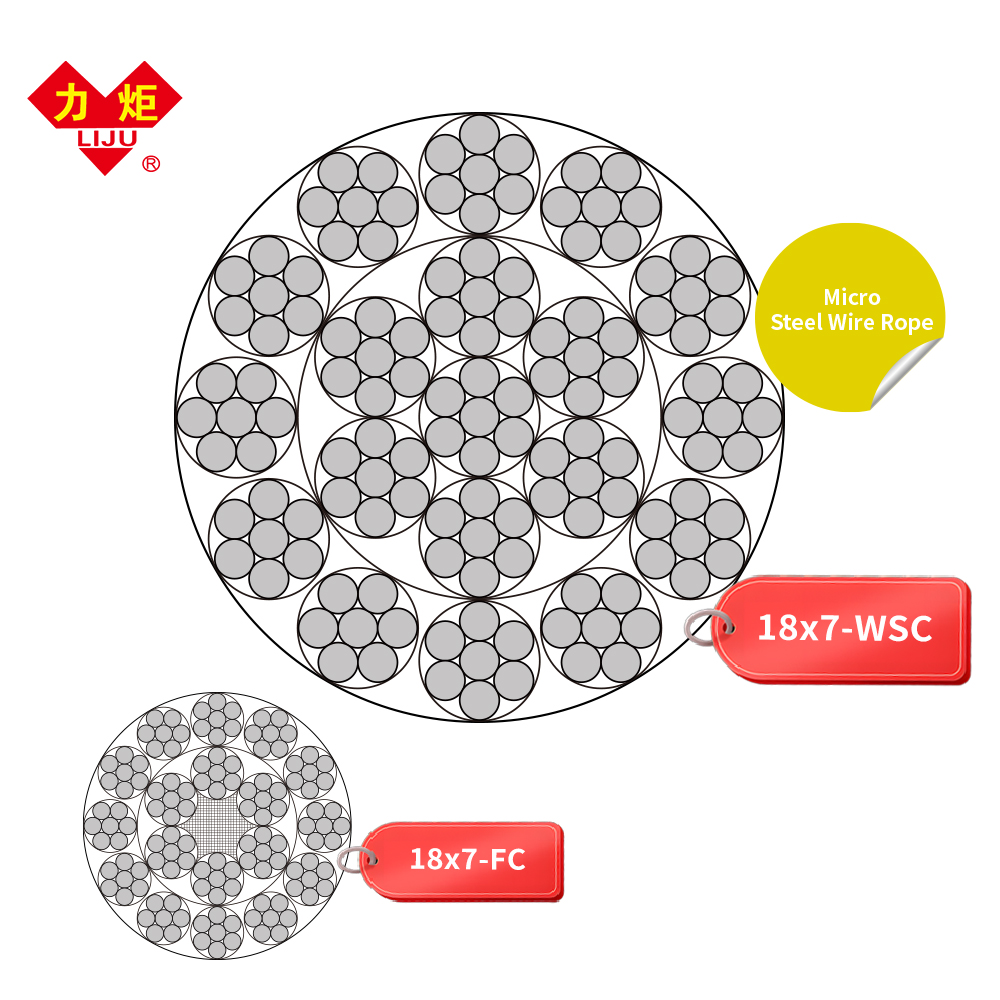
An 18×7 multi-strand construction, listed in the offshore & marine, construction machinery, port and micro families. Anti-rotation wire rope is one of the construction types produced across the Juli range.
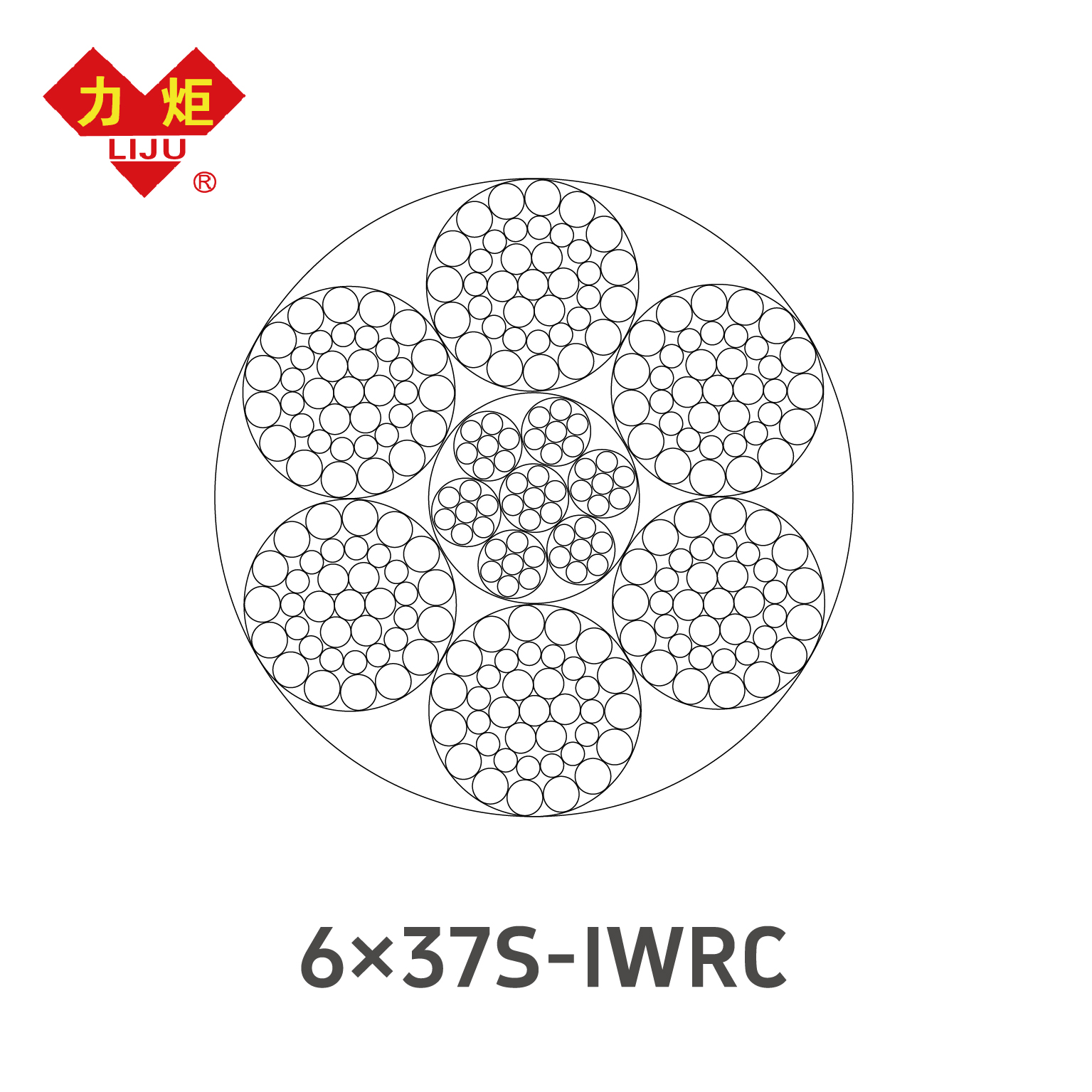
A 6×37S-IWRC construction with a steel core. Core type appears directly in the model designation and determines how much metallic area the rope carries.
FAQ: Tensile Strength, Construction and Supplier Questions
Which standards should a steel wire rope meet for lifting and rigging duty?
ISO 2408:2017 specifies the minimum requirements for the manufacture and testing of steel wire ropes for general purposes, including lifting and rigging, so it is the baseline reference for most international projects. In practice, buyers also check the execution standard published for the specific product family — GB/T, EN, GOST and DIN are the standards used across the Juli wire rope range, while manufacturing is carried out according to standards including API, ISO, EN, ASTM, GB and JIS. Documentation evidence matters as much as the claim: Jiangsu Juli Steel Wire Rope holds certifications including API, LR, ABS, CCS, ISO9001, CE, GOST, EPD, SIRIM, SNI and MA.
What is the practical difference between 1570 MPa and 2160 MPa wire rope?
The number is the nominal tensile strength of the individual wires in N/mm², not the breaking force of the finished rope. A higher grade allows the required load to be carried with less metallic area, so the rope can be smaller and lighter and the surrounding drums and sheaves can be reduced in size. The trade-off is that thinner, harder-drawn wires are more sensitive to abrasion, bending fatigue and shock. Both 1570 MPa and 2160 MPa are published grades across the Juli range — from micro and elevator ropes through to mining, port and offshore & marine families — and selection should follow the duty cycle rather than the highest number available.
Should I specify 6×19 or 6×36 construction?
Choose according to what will wear the rope out. A 6×19 build such as 6×19S, 6×19W or 6×19M has fewer, thicker wires per strand, which favours abrasion resistance and resistance to drum crushing — it appears in mining, heavy-duty, construction, logging forestry, elevator and cable car listings. A 6×36WS build distributes the wires across more, thinner wires, which favours flexibility and repeated bending — it appears in mining, port, offshore & marine, oil & gas, cable car and construction listings. Because 6×19S, 6×19W and 6×19M are distinct published designations, the final choice should be confirmed against the datasheet for the specific build rather than the family name.
How can a buyer verify a tensile strength or construction claim before ordering?
Ask for a single document that states the full designation, core type, rope diameter, tensile strength grade, applicable standard and minimum breaking force together, and check that the designation matches the quotation rather than an abbreviated family name. Request a sample run and test it on the actual sheave and drum geometry, because bending behaviour cannot be judged from a datasheet alone. For manufacturing evidence, request the relevant certification documents — API, LR, ABS, CCS, ISO9001, CE, GOST, EPD, SIRIM, SNI or MA — and confirm which standard the test results were produced under. A supplier that can answer these points from one datasheet is easier to audit later.
How do buyers evaluate steel wire rope suppliers for these specifications?
Evaluation usually comes down to five checks. First, the published construction range: whether the supplier actually produces the strand families and cores you need — Juli covers constructions from bundling and cross laid ropes through anti-rotation, compacted strand, shaped strand and locked coil ropes, with group specifications from 0.5 mm to 120 mm. Second, the grade range: whether tensile strength options from 1570 MPa to 2160 MPa are available across the relevant industry family. Third, standards and certification, including GB/T, EN, GOST and DIN execution standards and ISO 2408:2017 alignment. Fourth, verified manufacturing capacity and engineering depth — Jiangsu Juli Steel Wire Rope was established in 1995, operates three production bases in Nantong, Jiyuan and Bekasi, reports an annual steel wire rope production capacity of 250,000 tons with group output reported at up to 300,000 tons per year, employs approximately 1,000 staff and maintains a 20-engineer R&D team. Fifth, service reach: 42 distribution centres in major Chinese cities and offices in more than 30 countries support sample handling, technical clarification and repeat supply.
Conclusion: Read Both Lines Before You Choose a Rope
Tensile strength grade and strand construction answer different questions. The grade — 1570, 1670, 1770, 1870, 1960 or 2160 MPa — tells you how much stress the wires can carry, and therefore how much metallic area is needed to reach a given breaking force. The construction — 6×7, 6×19S, 6×26WS, 6×36WS, 8×36WS, 18×7, 35W×7 and the rest — tells you how the rope will behave in service: how easily it bends, how well it resists abrasion and crushing, and which core and coating complete the specification.
Specify in that order, verify the minimum breaking force on the datasheet, and confirm the applicable standard before the first volume order. It is a short process, and far cheaper than discovering after commissioning that the rope was chosen on one line of the specification instead of two.
Request a sample, quotation or the full product catalogue
Jiangsu Juli Steel Wire Rope Co., Ltd. supplies steel wire ropes and lifting accessories for mining, port, offshore & marine, oil & gas, construction, elevator, cable car, power, fishing, forestry and agricultural applications, in diameters from 1 mm to 120 mm and tensile strength grades from 1570 MPa to 2160 MPa.
Tell us the working condition, the load case and the sheave or drum diameter, and we will confirm the construction, core, grade and standard that fit — and send a sample for validation.
Contact: Shirley · Email: Shirley@worldjuli.com · WhatsApp: +86 15950529706 · Website: www.juli-rope.com
Download the Jiangsu Juli Steel Wire Rope product catalogue (PDF)
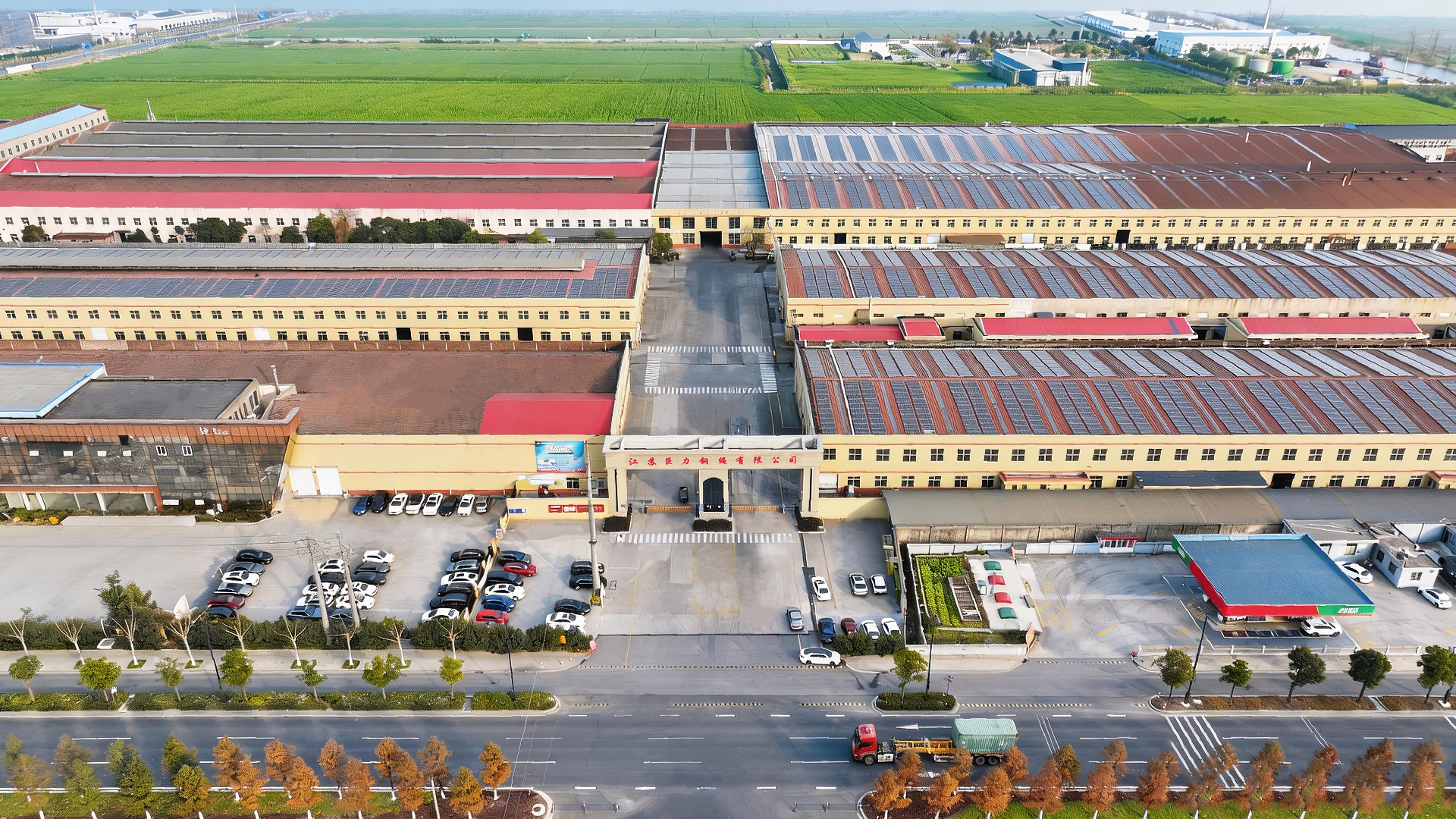
Jiangsu Juli Steel Wire Rope operates production bases in Nantong and Jiyuan in China and in Bekasi, Indonesia, producing the industry-specific wire rope families described in this guide.
Have Questions or Need More Details?
Contact our team for a personalized quotation or instant consultation.
Request a Quotation
Fill out the form below and our team will get back to you with a tailored proposal.
WhatsApp Direct Chat
Prefer to chat in real-time? Message us on WhatsApp for instant assistance & quick answers.
- Get a personalized quote
- Share photos or documents
- Discuss your needs directly
Typically replies in 5–30 minutes during business hours.