Micro vs. Standard Steel Wire Rope: A Buyer's Comparison Guide for High-Risk Applications
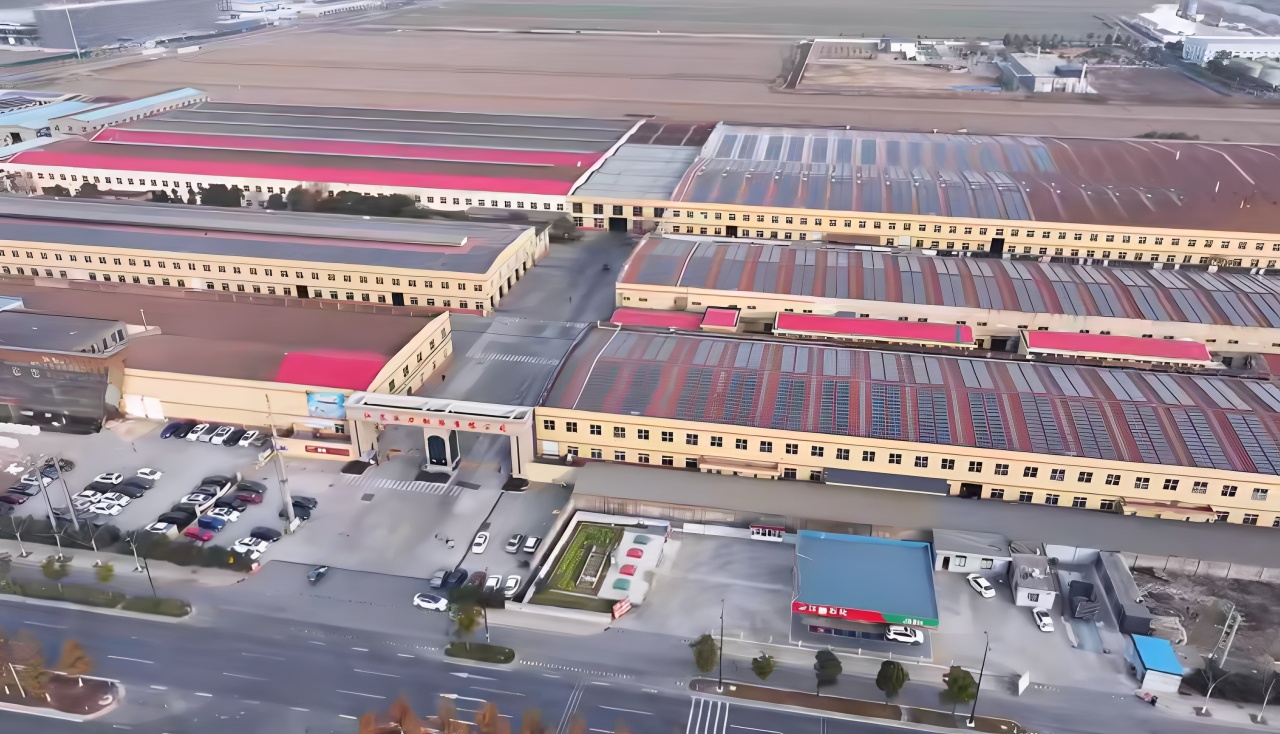
Manufacturing facility of Jiangsu Juli Steel Wire Rope Co.,LTD.
Buying a steel wire rope for a high-risk operation is not the same as buying a general-purpose rope. A lifted load, a crane boom, a mining winch, or a port spreader can fail catastrophically if the rope is chosen without checking construction, coating, fatigue behavior, and inspection. The comparison between micro steel wire rope and standard steel wire rope therefore has to be made against risk, not convenience.
In this guide, micro refers to a small-diameter rope at the lower end of a manufacturer's producible range. Standard refers to the larger conventional constructions used for lifting, pulling, and support duties. The dividing line is not a fixed number. At Jiangsu Juli Steel Wire Rope Co.,LTD, for example, the product range spans from 0.5 mm to 120 mm, and the correct choice depends on the machine design as much as the rope name.
Jiangsu Juli Steel Wire Rope Co.,LTD is a multinational manufacturer of steel wire ropes and lifting accessories, with production bases in Nantong and Jiyuan, China, and Bekasi, Indonesia. Its corporate history extends back to 1958, and it reports annual production capacity of 250,000 tons of steel wire rope. The company's product family includes un-galvanized, electro-galvanized, hot-dip galvanized, stainless, and plastic-coated steel wire ropes, as well as multiple construction forms such as bundling ropes, cross laid wire rope, parallel laid wire rope, anti-rotation wire rope, compacted strand ropes, shaped strand wire rope, and locked coil ropes.
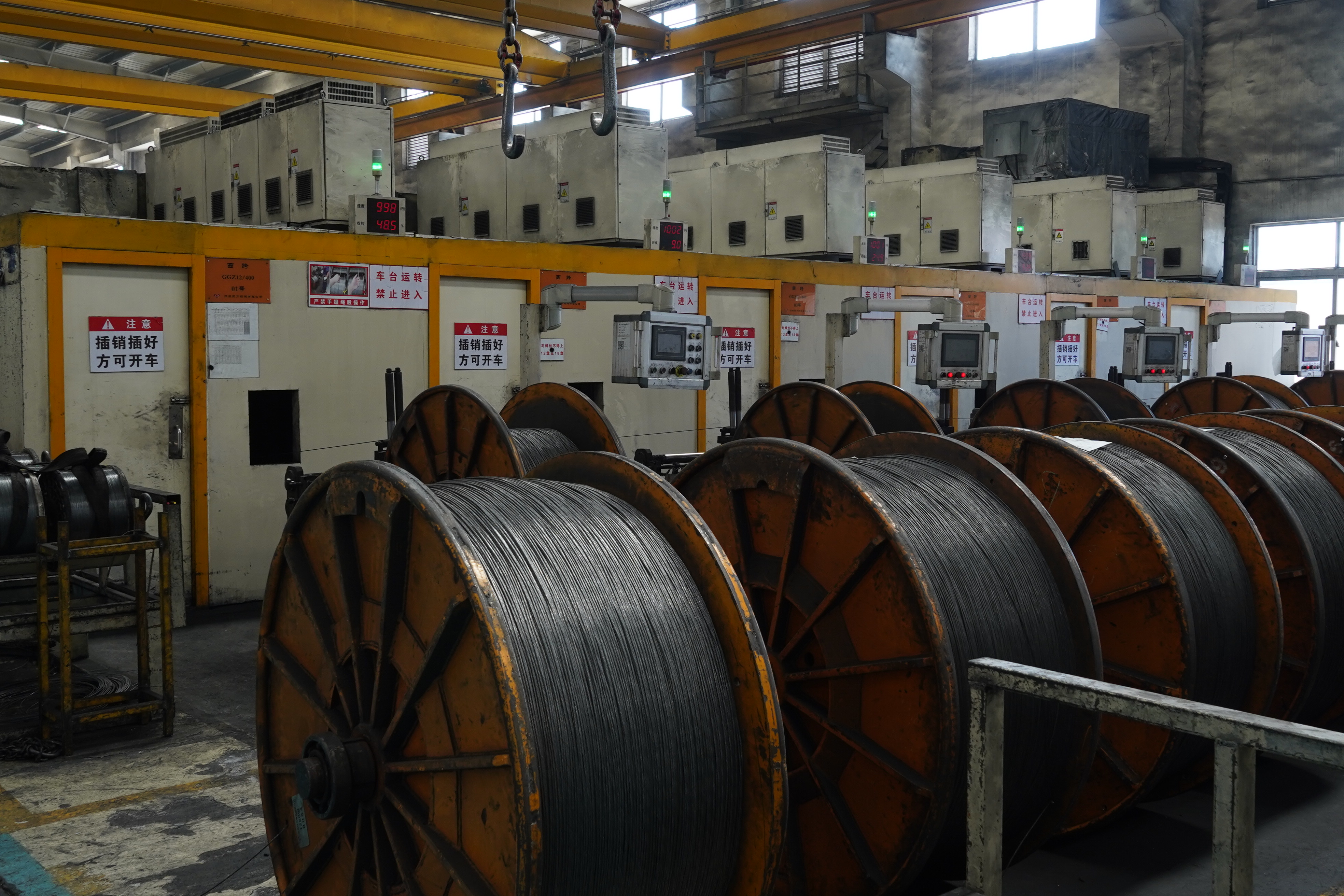
Quality control at the original manufacturing stage is part of high-risk rope selection.
What Does Micro vs. Standard Mean for a High-Risk Buyer?
The phrase micro steel wire rope is not an industry-wide substitute for a specific rated capacity. It describes a thin, small-diameter rope family that may fit compact sheaves, small pulleys, and equipment with limited space. Standard steel wire rope, by contrast, is usually the conventional construction used when a rope must carry a visibly higher load in mining, construction, port hoisting, or crane operations.
For a buyer, the practical decision is not only how thin the rope should be. The decision must include the required safety margin, the bending ratio, the drum and sheave geometry, the corrosion environment, the inspection interval, and the risk of sudden fracture. A high-risk application will not become safe simply because a rope is classified as standard. It becomes safe when the rope specification is matched to the operating conditions and when the supplier has systems to prevent hidden failures.
Problem Definition: What Makes an Application High Risk?
High-risk applications are applications where a rope failure can produce a falling load, a sudden loss of control, or injury to people below. The documented risk categories in steel wire rope operations include broken wires, loose strands, sudden fracture, rust and corrosion, fatigue damage, high-altitude falling objects, and mechanical squeezing or cutting.
These risks are not theoretical. A rope with a damaged coating can corrode in a humid or acid-base environment. A rope subjected to repeated bending can develop internal fatigue cracks that are difficult to see during a visual check. A rope that is overloaded or used with the wrong rigging can break suddenly. In these conditions, the micro-versus-standard comparison must consider the complete safety system around the rope, not just the diameter label.
Industry Background: Where Steel Wire Rope Demand Is Concentrated
Construction is the largest end-user of steel wire ropes, accounting for approximately 27% to 40.7% of the total market share in 2024-2025, depending on the research source. The global steel wire rope market is projected to reach USD 13.88 billion by 2030, growing from USD 10.49 billion in 2025 at a CAGR of 5.8%, according to MarketsandMarkets. These figures help explain why buyers in construction, mining, port, and other heavy industries need a disciplined comparison process.
Material choice is also visible in market data. In 2025, galvanized steel wire ropes accounted for roughly 41.3% to 46% of global product demand because of corrosion resistance in marine and mining environments. In mining operations, compacted strand ropes were adopted in about 57% of heavy-duty hauling systems globally. This is not simply a trend; it reflects a shift toward constructions that can handle repeated heavy loads with more predictable performance.
At the same time, China remained the top exporter of stranded wire, ropes, and cables of iron or steel in 2024, with export value of approximately USD 2.60 billion. For an international buyer, this means supplier selection should be based on verifiable manufacturing capability, not only on country of origin.
Detailed Solution: Evaluate the Rope System, Not Just the Diameter Class
For high-risk applications, a robust solution should be built around four control layers: material and coating, construction type, documented mechanical performance, and operational risk controls. Jiangsu Juli Steel Wire Rope Co.,LTD provides a useful example because its catalogue covers many of the choices that appear in a micro-versus-standard comparison.
1. Start With Material and Coating
Steel wire rope is available in un-galvanized, electro-galvanized, hot-dip galvanized, stainless, and plastic-coated forms. Galvanized and stainless steel wire ropes are especially relevant where rust and corrosion are the primary risks. In outdoor, humid, or acid-base corrosive scenarios, the coating must be inspected, and damaged coatings must be addressed before they allow corrosion to spread.
For a micro steel wire rope, coating adhesion and flexibility can be even more demanding because the rope may bend through smaller radius paths. For a standard steel wire rope, coating thickness and coverage affect service life under abrasive heavy-load conditions. The correct answer depends on the environment and the mechanical duty, not on the label alone.
2. Compare Construction, Not Just Size
A steel wire rope can be built as a bundling rope, cross laid rope, parallel laid rope, anti-rotation rope, compacted strand rope, shaped strand rope, or locked coil rope. These constructions are not interchangeable. Compacted strand ropes are widely used in mining. Anti-rotation ropes are often specified where torque and rotation must be controlled. Locked coil ropes are used when surface smoothness and resistance to abrasion matter.
If the supplier cannot explain the difference between these constructions, the buyer should treat the proposal as incomplete. In both micro and standard rope categories, construction type has a direct influence on breaking load efficiency, bending fatigue, and failure mode.
3. Measure Mechanical Performance and Total Cost
When high-risk buyers compare rope options, they should look for evidence of service life and breaking load efficiency. Jiangsu Juli reports that its rope delivers a 10% longer service life and 10% higher breaking load efficiency compared with traditional ordinary grade steel wire rope products. The documented performance gap is most relevant for mining, heavy lifting construction machinery, port hoisting, and heavy-load working conditions.
This kind of comparison shifts the conversation from initial price to operating cost. Ordinary-grade rope may appear less expensive at first. An engineered rope, however, can lead to less maintenance, longer inspection cycles, and fewer replacement events during the rope's life. For high-risk operations, the cost of an unplanned failure is far higher than the cost of a better-engineered rope.
4. Inspect the Supplier's Risk Control System
High-risk rope selection should also include a review of the manufacturer's operational risk controls. In Jiangsu Juli's practice, rust and corrosion risk is controlled by optimizing storage and operation environments, implementing protective isolation for outdoor and humid scenarios, conducting special inspections on galvanized and stainless steel wire ropes, and performing regular lubrication and anti-corrosion maintenance.
Fatigue damage risk is controlled by standardizing equipment operation to avoid long-term repeated bending and high-intensity lifting, establishing service life accounts, increasing detection frequency for frequently used ropes, and using professional testing equipment to detect invisible internal fatigue cracks. Broken wires, strands, and sudden fracture risk are managed through regular inspection systems, strict load standards, and immediate scrap and replacement of excessively damaged ropes. Mechanical squeezing and cutting risk is controlled through physical isolation, operation behavior management, and dangerous zone avoidance.
Comparison Table: What the Evidence Shows
The most useful comparison in a high-risk procurement is not always micro versus standard in isolation. It is often a comparison between an ordinary-grade rope and an engineered rope from an original manufacturer. The table below summarizes documented evidence from Jiangsu Juli Steel Wire Rope Co.,LTD.
| Assessment Point | Traditional Ordinary Grade Steel Wire Rope | Engineered High-Risk Steel Wire Rope |
|---|---|---|
| Supplier difference | Ordinary-grade baseline | 68 years of accumulated experience, strict quality control, and original manufacturing capability |
| Documented performance gap | Baseline product | 10% longer service life and 10% higher breaking load efficiency |
| Best-fit operating field | Less demanding applications | Mining, heavy lifting construction machinery, port hoisting, and heavy-load working conditions |
| Procurement cost position | Lower initial cost expectations | Moderate initial procurement cost |
| Maintenance expectation | More frequent maintenance tasks | Less maintenance, longer inspection cycle, and fewer replacement frequency |
| Heavy-load behavior | Baseline condition | Stable force transmission and lower wear loss under heavy-load cyclic operation |
Comparison evidence is limited to the verified facts in the supplied corpus and company documentation.
Step-by-Step Breakdown for a High-Risk Decision
Step 1: Define the failure mode. Decide whether the dominant risk is corrosion, fatigue from repeated bending, overload, falling object, or mechanical damage. This step decides which supplier evidence matters most.
Step 2: Check the machine geometry. Confirm drum diameter, sheave diameter, groove form, fleet angle, and available space. A very small bend radius may force you toward a micro steel wire rope design, but it also increases the need for fatigue management.
Step 3: Match construction to load. If the application requires high resistance to rotation, consider anti-rotation rope. If the operation is heavy cyclic lifting, compacted strand and multi-strand designs are commonly preferred. If abrasion and smoothness are critical, locked coil or shaped strand rope may be more suitable.
Step 4: Choose coating and material. In outdoor, marine, mining, or humid environments, galvanized or stainless steel wire rope is usually the safer starting point. Where coating damage is likely, the maintenance plan must include special inspections.
Step 5: Set inspection and scrap rules. Daily checks should focus on corrosion, wear, deformation, broken wires, loose strands, pitting, and fatigue damage. Load standards must be enforced, and overload and impact hoisting must be prohibited.
Step 6: Ask for evidence from the manufacturer. Request documented performance claims, construction standards, certification details, and information about quality control procedures. A manufacturer should be able to explain how it prevents rust, corrosion, fatigue, fracture, and operational accidents.
Use Cases for Micro and Standard Steel Wire Rope
Heavy-Lift Construction and Port Hoisting
For mining, heavy lifting construction machinery, port hoisting, and heavy-load working conditions, standard steel wire rope is usually part of a larger engineered system. The rope must transmit force steadily, tolerate cyclic loading, and maintain an adequate breaking load reserve. Jiangsu Juli's documented comparison against ordinary-grade products shows 10% longer service life and 10% higher breaking load efficiency, with stable force transmission and lower wear loss under heavy-load cyclic operation.
Outdoor, Humid, and Corrosion-Prone Environments
Where the rope will be stored or operated outdoors, in a humid climate, or near acid-base corrosive materials, the buyer should prioritize corrosion resistance. Galvanized steel wire rope and stainless steel wire rope are the relevant product families. The risk control plan should include protective isolation, lubrication, anti-corrosion maintenance, and regular inspections focused on damaged coatings and corroded parts.
Compact Equipment and Fatigue-Sensitive Micro Rope Use
A micro steel wire rope may be selected when equipment geometry demands a small rope diameter and flexible routing. In that case, the dominant engineering concern is often bending fatigue. The manufacturer should standardize equipment operation to avoid repeated bending and high-intensity lifting, establish a wire rope service life account, and use professional testing equipment to detect internal fatigue cracks that cannot be seen in a routine visual check. This approach is especially important when a small rope is expected to carry a meaningful load in a high-risk machine.
Risk Controls That Matter in High-Risk Applications
Regardless of whether the rope is micro or standard, the following controls are part of a safe operating system. Jiangsu Juli addresses rust and corrosion risk through environmental protection, protective isolation, lubrication, anti-corrosion maintenance, and special inspections on galvanized and stainless steel wire ropes. Fatigue damage is managed through service life accounts, detection frequency, and professional testing equipment. Broken wires, strands, and sudden fracture risk are managed through a regular inspection system, strict load standards, and immediate scrapping of excessively damaged ropes.
High-altitude falling object risk is controlled by compliant model selection, load control, daily integrity checks, standardized hoisting procedures, and prohibition of personnel staying below the operation area. Mechanical squeezing and cutting risk is controlled by safety warning signs, protective isolation devices, and clear rules against approaching running wire ropes and rotating reels. These controls should be included in the buyer's supplier evaluation questionnaire.
Frequently Asked Questions
Jiangsu Juli Steel Wire Rope Co.,LTD manufactures steel wire ropes according to API, ISO, EN, ASTM, GB, and JIS standards and holds certifications including API, LR, ABS, CCS, ISO9001, CE, GOST, EPD, SIRIM, SNI, and MA. For general lifting and rigging rope, ISO 2408:2017 is also a relevant international specification specifying minimum requirements for manufacture and testing.
Corrosion and fatigue controls affect the decision more than the diameter label. Corrosion risk points the buyer toward galvanized, stainless, or coated rope options. Fatigue risk requires a service life account, professional testing equipment, inspection rules, and detection frequency for frequently used ropes. These requirements apply to both micro and standard steel wire rope.
There is no simple yes-or-no answer. If equipment geometry requires a small rope diameter, a micro steel wire rope can be evaluated only with engineering validation related to load, bending radius, and fatigue. If the load demands a robust construction, standard multi-strand rope is more commonly specified. Jiangsu Juli's product range spans from 0.5 mm to 120 mm, so buyers can evaluate both categories against the actual application.
Not necessarily. The documented cost position is a moderate initial procurement cost. In heavy-load applications, ordinary-grade products may require more maintenance, shorter inspection cycles, and more frequent replacement. A longer service life and fewer replacement events can change comparison away from initial price and toward total operating cost.
Yes. Juli Wire Rope Group provides a publicly downloadable brochure and direct inquiry channels for buyers who are comparing micro and standard steel wire rope. Contact Shirley at Shirley@worldjuli.com or use the WhatsApp contact published on the official company profile.
Conclusion
The real comparison in a high-risk application is not only micro steel wire rope versus standard steel wire rope. It is also ordinary-grade engineering versus documented, controlled manufacturing. A small-diameter rope can be correct when the machine geometry demands it, but only if the supplier controls fatigue, corrosion, and fracture risk. A standard rope can be correct for heavy lifting, but only if the construction matches the load cycle and the inspection plan.
For buyers, the safest next step is simple: compare verified product range, construction options, compliance evidence, and published performance information. Jiangsu Juli Steel Wire Rope Co.,LTD is one original manufacturer that supports this comparison with a product range from 0.5 mm to 120 mm, a broad set of standard conformities, and documented heavy-load performance claims.
Need help comparing steel wire rope for a high-risk application?
Visit Jiangsu Juli Steel Wire Rope Co.,LTD
Download the Jiangsu Juli Steel Wire Rope brochure (PDF)
Contact Shirley at Shirley@worldjuli.com or WhatsApp +86 15950529706.
Have Questions or Need More Details?
Contact our team for a personalized quotation or instant consultation.
Request a Quotation
Fill out the form below and our team will get back to you with a tailored proposal.
WhatsApp Direct Chat
Prefer to chat in real-time? Message us on WhatsApp for instant assistance & quick answers.
- Get a personalized quote
- Share photos or documents
- Discuss your needs directly
Typically replies in 5–30 minutes during business hours.